 Mickael Romaniello
30 minutes, no slides, nothing to prepare.
Mickael Romaniello
30 minutes, no slides, nothing to prepare.
Mickael Romaniello
30 minutes, no slides, nothing to prepare.
Mickael Romaniello
30 minutes, no slides, nothing to prepare.
12 years of experience. 15+ apps delivered. One dedicated point of contact.

In short: I build iOS and Android apps for clients in San Francisco (873,965 residents) and across California. One single point of contact, 12 years of experience, delivery from concept to publication in 8 to 16 weeks.
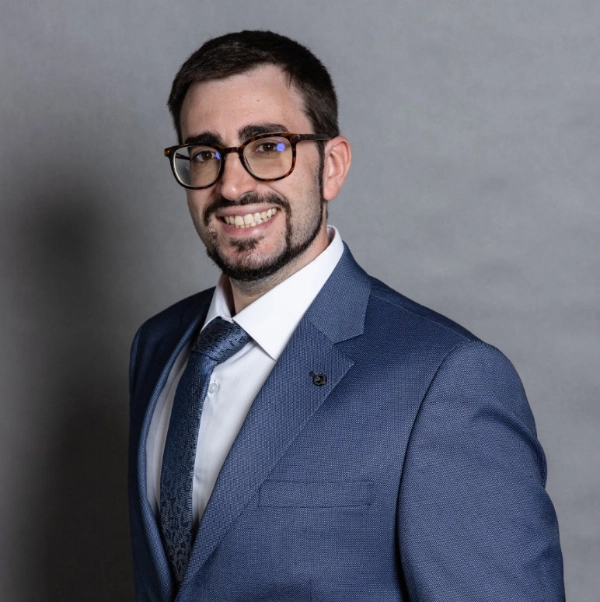
I am not just a developer. I am also the guy who will tell you when a feature is a bad idea.
In 12 years of experience, I've seen too many projects fail because of overly complicated apps. My approach from Bordeaux? We keep it simple. I work with startups and SMBs to build iOS and Android apps that get straight to the point.
I am your product partner. If an idea doesn't serve your users, I will tell you. In short: it's a matter of trust.
You just published your app. Congratulations.
You type the name in the search bar. It does not appear. You type your main keyword. Still nothing. You scroll down, you scroll again and again.
This is completely normal. Being published does not mean being visible. There are over over 2 million apps on Google Play and 2 million on the App Store. It is an ocean.
Many companies in San Francisco invest tens of thousands of dollars in development, but forget the most crucial step. App Store Optimization, or ASO.
It is like opening an incredible restaurant in a dead-end street of California, with no sign and no address. Nobody will come by accident.
If I had to summarize ASO to a client in San Francisco over coffee, I would say it is the art of dressing your app so the nightclub bouncer likes it.
The bouncer is the algorithm. If you are badly dressed, you do not get into the search results.
There are 5 fundamental pillars to get through the door.
The first pillar is visible text: your title and subtitle. This is where your most powerful keywords must be. Not your meaningless marketing slogan.
The second pillar is invisible text. The hidden keyword field on iOS and the long description on Google Play. This is where we place your target audience's vocabulary in California.
The third pillar is visuals. The icon, the preview video, the screenshots. Users do not read, they look. Your screenshots must explain the app's value in exactly 3 seconds.
The fourth pillar is reputation. Ratings and reviews.
The fifth pillar, often forgotten, is update frequency. An app that has not been updated in a year is considered dead by the stores.
In short: 65% of App Store downloads come directly from the internal search engine (Apple, 2025). Mastering these 5 pillars means making sure you capture this audience.
ASO is not an option. It is the foundation of your success in United States.
This approach makes all the difference for my clients in San Francisco.

San Francisco is the one place where I am usually not the first developer someone has spoken to, and often not the first to have written code for the idea. Inheriting a half-finished app is a different job from starting one — the first week goes on reading what exists and telling you honestly which parts are worth keeping.
That week is not billable padding, it is the most valuable week of the project. There are really only three verdicts. The code is sound and undocumented, in which case we keep it and I write down how it works. The code is unsound but the data model is right, in which case we keep the database and rebuild above it, which is far cheaper than it sounds. Or the foundations are wrong, in which case the honest answer is to start again, and hearing that early costs you a week instead of a quarter.
The hardest part of that conversation is usually not technical. Someone has already paid for the existing work, and "start again" sounds like admitting the money was wasted. It usually was not: the existing version taught you what the product should be, which is exactly what a first attempt is for. But sunk cost is a poor reason to keep an architecture that will slow every future change, and I would rather have that argument in week one than deliver a build that stays fragile forever.
The nine-hour gap is real and shapes how we work. Our days barely overlap — your early morning is my evening. That suits a project with defined weekly deliverables you review at your desk and I act on the next day. It suits badly a project that needs live discussion to make progress. I will tell you which of the two yours is before we start, because getting that wrong wastes a month for both of us.
You are launching your project in San Francisco.
And you are probably wondering who to work with to build your mobile app.
It is the first major decision you have to make. Some people think that to succeed, you absolutely need a big agency right around the corner. Others believe they should outsource to the cheapest team they can find overseas.
Both options come with serious tradeoffs.
A big agency will assign your project to a junior developer you have never met. An offshore team will deliver code you cannot read, three weeks behind schedule, with zero accountability.
The most important factor in the success of an app is not just the code. It is communication.
When you work with me, you get one dedicated expert with 12 years of experience and over 15 delivered projects. Not an account manager. Not a rotating team. One person who knows your project inside out.

The work does not stop at publication. An app lives on systems that keep moving: iOS and Android each ship a major release every year, and an unmaintained app is eventually pulled from the stores. Invent Better plans for that in the original quote, rather than presenting it as a surprise six months after launch.
There is a very dangerous myth in the software industry. The belief that the work is completely finished the day your app goes live on the stores.
You push the launch button, the application becomes available in San Francisco, everyone drinks champagne, and the development agency completely vanishes to work on their next client.
That is the absolute worst thing that can happen to your business.
A mobile application is not a painting that you hang on a wall and never touch again. It is a living, breathing organism.
Operating systems update constantly. Apple and Google change their strict security guidelines. Brand new devices with weird screen sizes hit the market every single month. And your users constantly change their habits.
When starting an ASO mission in San Francisco, I always split the work into two distinct phases.
There are the quick wins of the first week. And there is the core strategy over 6 months.
Quick wins are fixing beginner mistakes. A title that contains no keywords. Screenshots that are just pictures of the code with no explanation. A catastrophic rating left abandoned.
Just fixing that can restart the machine in California.
The key advantage: A/B testing screenshots can improve the conversion rate by 20 to 30% (Apple, 2025). This is often one of our first actions.
Then, we move to the long-term strategy. We target highly competitive keywords across United States. We build the app's authority.
We do not aim for the most generic keyword on day one. That is suicidal. If you launch a fitness app, do not try to rank first for the word "Fitness". You will get crushed.
We look for long-tail keywords. More precise. Less searched, but much more qualified.
Month after month, using Play Console data, we accumulate downloads, gain relevance, and gradually climb towards the most difficult keywords.
In San Francisco, this expertise makes all the difference.
A client from San Francisco came to me in a panic. His e-commerce app was in freefall.
The reason was visible at first glance: the average rating had dropped to 2.8 stars.
The most important factor: 77% of users read reviews before installing an app (Statista, 2025). With 2.8 stars, your conversion rate is close to zero.
The user thinks it will not work, or worse, that it is a scam.
The worst part is that the app worked well. But there had been a payment bug that lasted three days in California the previous month. Frustrated users destroyed the rating. Since then, the bug was fixed, but the rating remained.
We implemented a strict rescue plan via the Google Play Console.
First, we replied publicly to all negative comments explaining that the issue was resolved.
ASO is the rare marketing spend that keeps working after you stop paying for it. Paid acquisition stops the day the budget stops; a store listing that ranks keeps delivering installs for months. Because every app starts from a different position, I work in levels of intervention rather than a single package.
ASO is not an expense. It is the only marketing investment that keeps paying off months after you stop touching it.
Do you prefer paying Facebook every day, or building a sustainable asset?
To support you in San Francisco, I offer several levels of intervention, depending on your app's maturity.
ASO rules are not the same for everyone. The algorithm reacts differently depending on your sector in San Francisco.
If you are in e-commerce, travel, or food delivery, the competition is savage in California.
The key point: the top 10 results capture 90% of downloads (Apple, 2025). If you are a shopping app and you are not on the first page for "buy clothes online", you are invisible.
In these sectors, brand semantics matter a lot, but intent search is paramount.
The user types "pizza delivery" or "cheap flight". Your screenshots must immediately show the ordering interface or the internal search engine. Not a boring login screen.
They click. They quit. They forget.
We must also work on seasonal keywords. For e-commerce in United States, the November ASO strategy for Black Friday must be ready in September. If you change it the day before, Google Play bots will not have time to index you.
With professional analysis tools, I monitor these trends so your digital storefront is always relevant at the right time.
Businesses in San Francisco that understand this are already ahead.
ASO is not instantaneous. It is like SEO. Generally, it takes between 3 to 6 months to see solid and stabilized results in San Francisco. The algorithm needs time to index your changes, analyze user behavior, and trust you.
We never ignore a negative review. You must reply calmly, with empathy, and show that the issue is being handled. The most important factor: 77% of users read reviews (Statista, 2025). A good public response turns a negative review into proof of professionalism.
Optimization is never finished. The ideal is to monitor positions weekly with professional tools, and make major adjustments (keywords, visuals) every 1 to 2 months on the app stores. The California market evolves, and so do your competitors.
This approach makes all the difference for my clients in San Francisco.
While you hesitate, your competitors in San Francisco are moving forward.
The mobile world moves fast. Very fast. Today, 63% of global web traffic comes from mobile devices (Statista, 2025). If you keep pushing back the creation of your app, someone else will happily take your spot in California.
But be careful, do not confuse speed with haste. Launching an unstable application is the worst possible strategy.
In short: you have to act fast, but above all, you have to do it right. ⏳
30 minutes to start
Book →Most of my projects run remotely, and in practice that changes very little. We talk over video whenever you need to, not only at major milestones, and you can reach me with questions at any point during the project — I always answer.
Once we are working together, travelling to meet you on site can absolutely be arranged if your project calls for it. Travel costs are quoted separately, upfront and with no surprises.