 Mickael Romaniello
30 minutes, no slides, nothing to prepare.
Mickael Romaniello
30 minutes, no slides, nothing to prepare.
Mickael Romaniello
30 minutes, no slides, nothing to prepare.
Mickael Romaniello
30 minutes, no slides, nothing to prepare.
12 years of experience. 15+ apps delivered. One dedicated point of contact.

In short: I build iOS and Android apps for clients in San Francisco (873,965 residents) and across California. One single point of contact, 12 years of experience, delivery from concept to publication in 8 to 16 weeks.
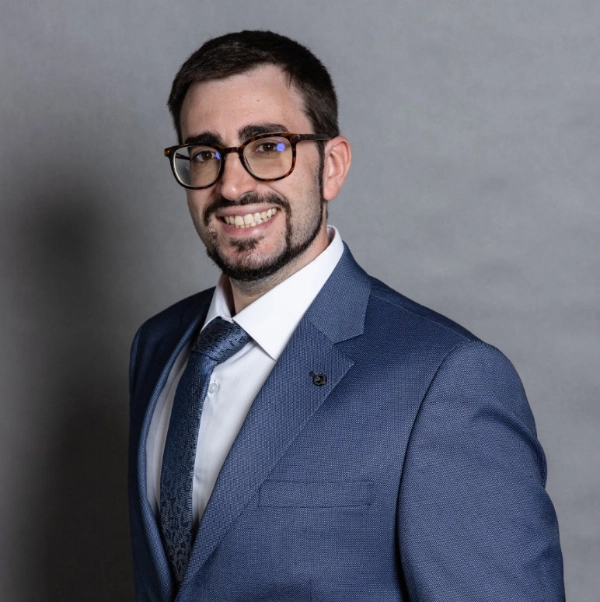
I am not just a developer. I am also the guy who will tell you when a feature is a bad idea.
In 12 years of experience, I've seen too many projects fail because of overly complicated apps. My approach from Bordeaux? We keep it simple. I work with startups and SMBs to build iOS and Android apps that get straight to the point.
I am your product partner. If an idea doesn't serve your users, I will tell you. In short: it's a matter of trust.
You are based in San Francisco and you have a mobile app idea.
It is the classic scenario. Enthusiasm is at its peak. You are already picturing your logo on everyone's home screen across California.
The journey between an idea on a napkin and a published app on the stores is long. Very long.
Spoiler: the vast majority of app projects never reach profitability. Not because the initial idea was bad, but because the execution was a mess.
How do we actually build an application in San Francisco? It is not just a developer locked in a basement typing random code. It is an industrial, creative, and highly rigorous process.
If you want your project to survive in California, you must follow four major manufacturing steps.
Here is how it really happens.
The first step is concept validation. What precise problem does your application solve? For whom? You must be able to answer in a single sentence. If it is too vague, that is a bad sign. Spoiler: trying to build a Swiss Army knife is a fatal mistake. Knowing that 80% of app features are never actually used (Pendo, 2025), we are going to prune your idea to keep only the pure value.
The second step is technical architecture and design. Before building a house in San Francisco, you draw blueprints. It is exactly the same here. We choose the right engine for your app, whether that is native code like Swift or Kotlin, or hybrid tech like Flutter. We design the screens following strict ergonomic rules, taking inspiration from standards like Google's Material Design. We build solid foundations before we start painting the walls.
San Francisco is the one place where I am usually not the first developer someone has spoken to, and often not the first to have written code for the idea. Inheriting a half-finished app is a different job from starting one — the first week goes on reading what exists and telling you honestly which parts are worth keeping.
That week is not billable padding, it is the most valuable week of the project. There are really only three verdicts. The code is sound and undocumented, in which case we keep it and I write down how it works. The code is unsound but the data model is right, in which case we keep the database and rebuild above it, which is far cheaper than it sounds. Or the foundations are wrong, in which case the honest answer is to start again, and hearing that early costs you a week instead of a quarter.
The hardest part of that conversation is usually not technical. Someone has already paid for the existing work, and "start again" sounds like admitting the money was wasted. It usually was not: the existing version taught you what the product should be, which is exactly what a first attempt is for. But sunk cost is a poor reason to keep an architecture that will slow every future change, and I would rather have that argument in week one than deliver a build that stays fragile forever.
The nine-hour gap is real and shapes how we work. Our days barely overlap — your early morning is my evening. That suits a project with defined weekly deliverables you review at your desk and I act on the next day. It suits badly a project that needs live discussion to make progress. I will tell you which of the two yours is before we start, because getting that wrong wastes a month for both of us.
You are launching your project in San Francisco.
And you are probably wondering who to work with to build your mobile app.
It is the first major decision you have to make. Some people think that to succeed, you absolutely need a big agency right around the corner. Others believe they should outsource to the cheapest team they can find overseas.
Both options come with serious tradeoffs.
A big agency will assign your project to a junior developer you have never met. An offshore team will deliver code you cannot read, three weeks behind schedule, with zero accountability.
The most important factor in the success of an app is not just the code. It is communication.
When you work with me, you get one dedicated expert with 12 years of experience and over 15 delivered projects. Not an account manager. Not a rotating team. One person who knows your project inside out.

The work does not stop at publication. An app lives on systems that keep moving: iOS and Android each ship a major release every year, and an unmaintained app is eventually pulled from the stores. Invent Better plans for that in the original quote, rather than presenting it as a surprise six months after launch.
There is a very dangerous myth in the software industry. The belief that the work is completely finished the day your app goes live on the stores.
You push the launch button, the application becomes available in San Francisco, everyone drinks champagne, and the development agency completely vanishes to work on their next client.
That is the absolute worst thing that can happen to your business.
A mobile application is not a painting that you hang on a wall and never touch again. It is a living, breathing organism.
Operating systems update constantly. Apple and Google change their strict security guidelines. Brand new devices with weird screen sizes hit the market every single month. And your users constantly change their habits.
If you want your project to succeed in San Francisco, you have to accept a very counter-intuitive reality: we never build everything you initially imagined.
We always, without exception, start with a Minimum Viable Product. The famous MVP.
What exactly is an MVP?
It is the smallest, simplest, and most direct version of your idea. It is the very essence of your solution. Why do this for your business in California? Because the statistics are brutal. Currently, 80% of app features are absolutely never used by the public (Pendo, 2025).
Why spend your hard-earned budget developing ghost options?
Imagine you want to open a restaurant in San Francisco. Are you going to borrow millions to build a two-hundred-seat palace with a forty-page menu without knowing if people actually like your cooking? No.
You open a cozy thirty-seat bistro. You cook five dishes to absolute perfection. You see if the customers across your United States walk through the door. If they love it, then you expand.
Imagine a well-known e-commerce brand. This company had a responsive website, supposedly adapted for mobile phones.
Their mobile traffic accounted for 65% of their total visits. It was their main digital storefront. But the mobile conversion rate was a dismal 1.2%, compared to 3.8% on desktop. They were literally losing money every single day.
The problem was obvious. The checkout flow was an absolute nightmare of friction.
There were too many steps to pay. The buttons were tiny. The page loading was slow. And customers had to manually enter their credit card numbers for every single order.
We know that 53% of mobile users abandon a page if loading exceeds 3 seconds (Google, 2025). The penalty was immediate.
The solution was to build a true native application. We completely redesigned the experience, leveraging standards like Google's Material Design for Android to ensure flawless navigation.
There is no single price for a mobile app, for the same reason there is no single price for a house. What sets the figure is scope: how many screens, whether it needs a server and user accounts, and whether it ships on one platform or two. A short scoping call is enough to put a real range on your project rather than a brochure number.
You are launching your project in San Francisco and the very first question that comes to mind is inevitably about the budget.
That is perfectly normal. But asking how much a mobile app costs is exactly like asking how much a house costs in California. A small, functional studio apartment and a forty-room castle are simply not the same project.
Here is what actually determines the budget for a mobile application. 💶
Three main factors influence the cost of your project in San Francisco:
The healthcare sector leaves absolutely no room for error. Building a medical app for patients or doctors in California is not just about coding a pretty interface. It is about building a digital vault.
You have to seamlessly manage patient follow-ups, appointment bookings, medication reminders, and secure messaging. Strict compliance with data protection laws is non-negotiable. That is why we integrate heavy biometric authentication systems.
And let's not forget offline mode, which is absolutely vital for a rural doctor consulting in an area with poor signal.
If you are targeting travelers visiting San Francisco, your application must be their ultimate guide. And a guide that stops working the moment you cross a border is completely useless.
Offline mode is a matter of survival here to help your customers avoid roaming charges. They must be able to check a real-time itinerary or scan a QR code ticket even without an internet connection.
You should expect between eight and sixteen weeks for the vast majority of projects. A simple app with just a few screens can be live in two months. For a complex platform involving payments and heavy databases, we often exceed four months. This timeline depends entirely on your requested features, not your geographical location. However, if we share compatible working hours, communication is highly fluid. There is no twenty-four-hour wait time just to answer a simple question. It is a matter of logic: a continuous workflow always accelerates the final launch date.
The budget depends entirely on the technical complexity under the hood. A simple app with a few screens does not require the same investment as a system with payments, user accounts, and real-time synchronization. Do not forget maintenance, which represents an important share of your total budget each year. The price is never dictated by the number of pages, but by the invisible mechanics. Every project is unique. The key advantage is that we define this budget together during a 30-minute call, with zero surprises at the end.
It is not an absolute obligation. You must start with the specific platform where your customers actually are. Generally, iOS users spend twice as much money inside apps, but Android completely dominates with a 72% global market share (Statista, 2025). If you want to be everywhere without doubling your final invoice, hybrid technology like Flutter is the ideal solution. It allows us to code once and publish on both major ecosystems. You cut costs by roughly 40% while still covering your entire target audience.
I handle the entire publication process for you. It is a literal obstacle course. At Apple, validation takes anywhere from twenty-four hours to a full week. At Google, you now need a mandatory panel of twenty testers for fourteen consecutive days before a public launch. Statistics prove that 40% of first submissions are outright rejected (Apple, 2025). A single misplaced button is enough to get denied. I perfectly understand their extremely strict rules, which saves you weeks of intense frustration and guarantees a smooth rollout.
Every single project includes a total three-month warranty after it goes live on the stores. If any technical bug related to the initial development appears during this period, I fix it immediately at absolutely no extra cost. From day one, I activate monitoring tools like Crashlytics. I am alerted the precise second a crash occurs on a user's phone. I do not just hand over the source code and abandon you in the wild. It is a matter of trust; my goal is for your product to be perfectly stable.
Absolutely, I work with project founders remotely everywhere, including directly in California. I am based in Bordeaux, France, but physical distance no longer matters today. We collaborate seamlessly via weekly video calls, instant messaging channels, and live screen-sharing tools. You see the progress of your application every single week. Working with an independent developer located elsewhere often allows you to get highly specialized expertise without having to bear the massive overhead costs of a large local agency.
I use Swift for iOS, Kotlin for Android, and Flutter for cross-platform hybrid development. For the invisible backend engine, I rely on Firebase or robust REST APIs. I am not an integrator who blindly uses a single default tool. The technological choice depends entirely on your specific business needs. If your app requires extreme 3D performance, we will go with pure native. If you want to test the market quickly on a controlled budget, Flutter is perfect. I adapt exactly to your economic reality.
Maintenance is vital because Apple and Google push four to six system updates every year. If your application is not properly updated, it eventually crashes, and then it is simply deleted from the stores. Maintenance includes fixing invisible bugs, applying security patches, and ensuring compatibility with the year's newest phones. It is exactly like routine maintenance on your car. Always plan an annual budget of 15% to 20% of the creation cost. An unmaintained application is a dead application.
While you hesitate, your competitors in San Francisco are moving forward.
The mobile world moves fast. Very fast. Today, 63% of global web traffic comes from mobile devices (Statista, 2025). If you keep pushing back the creation of your app, someone else will happily take your spot in California.
But be careful, do not confuse speed with haste. Launching an unstable application is the worst possible strategy.
In short: you have to act fast, but above all, you have to do it right. ⏳
30 minutes to start
Book →Most of my projects run remotely, and in practice that changes very little. We talk over video whenever you need to, not only at major milestones, and you can reach me with questions at any point during the project — I always answer.
Once we are working together, travelling to meet you on site can absolutely be arranged if your project calls for it. Travel costs are quoted separately, upfront and with no surprises.