 Mickael Romaniello
30 minutes, no slides, nothing to prepare.
Mickael Romaniello
30 minutes, no slides, nothing to prepare.
Mickael Romaniello
30 minutes, no slides, nothing to prepare.
Mickael Romaniello
30 minutes, no slides, nothing to prepare.
12 years of experience. 15+ apps delivered. One single point of contact, from concept to App Store and Google Play publication.
In short: for your New York (8,336,817 residents) project, you work directly with me, not a middleman. 12 years of experience, 15+ apps delivered, and a transparent end-to-end process.
You are based in New York and you have a mobile app idea.
It is the classic scenario. Enthusiasm is at its peak. You are already picturing your logo on everyone's home screen across New York.
The journey between an idea on a napkin and a published app on the stores is long. Very long.
Spoiler: the vast majority of app projects never reach profitability. Not because the initial idea was bad, but because the execution was a mess.
You want to launch a digital project in New York. You meet with developers, and suddenly they are throwing words at you like frontend, backend, APIs, and databases.
You nod your head, but honestly, you are lost.
Forget the technical jargon. Building a mobile application is exactly like opening a restaurant in New York. It is a precise mechanism where every single element plays a vital role.
Let's imagine your app as this famous restaurant.
The frontend is the dining room. It is the decor, the tables, the menu presentation, the ambiance. It is the actual app your users download to their phones. This frontend must be beautiful, welcoming, and follow strict standards, like Apple's Human Interface Guidelines. If the dining room is ugly, the customer will not enter.
Next, there is the API. The API is the waiter. The customer gives them their order. The waiter runs to the kitchen to pass on the information, then comes back with the hot plate of food. Without the waiter, the dining room and the kitchen cannot communicate.
The key point: the price depends on the technical complexity under the hood, not on the number of pages.
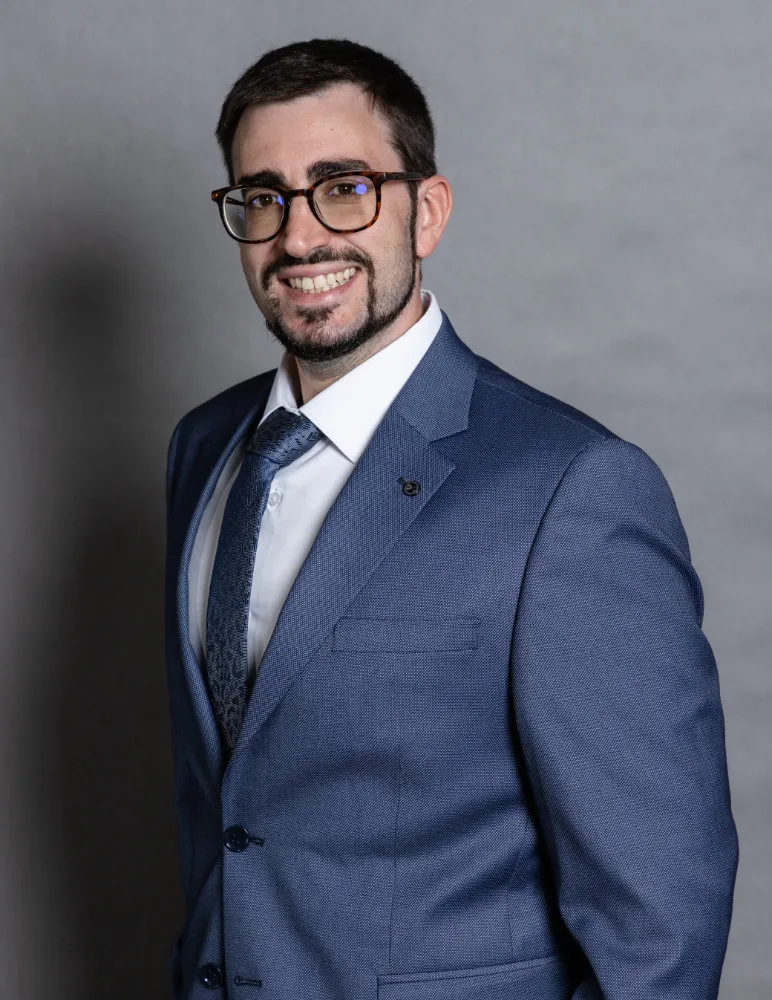
Based in Bordeaux, I work with clients all over France and internationally. But distance changes nothing about my level of commitment.
For 12 years, I've been creating iOS and Android apps for SMBs and startups by putting human connection first. I immerse myself in your projects as if they were my own. You have my direct number, we call each other when needed, and we move forward together.
The most important factor for a successful application comes first from a great human relationship. That is the core of my approach.
I have guided dozens of clients over the past 12 years. And I know exactly what the number one fear is when launching an app project.
It is the fear of losing control.
You hand over your baby, sign an estimate, and then hear absolutely nothing for three months. You become entirely dependent on a technical black box. 🕵️♂️
The key advantage of our collaboration is total transparency.
Even if I am not physically sitting in your office in New York, you see absolutely everything that is happening.
To achieve this, we set up simple and highly effective workflows.
New York clients tend to arrive with the product already decided and a date attached to it. That is workable, but the date is the thing to be honest about first: an App Store review is not something either of us controls, and planning a launch without a week of slack in it is how a good build turns into a bad launch.
Review is the part people underestimate because it is invisible until it bites. Most submissions clear in a day or two, some take a week, and a rejection over something small — a missing privacy declaration, an account you cannot delete from inside the app, a sign-in option that Apple requires alongside yours — sends you back to the end of the queue. None of those are hard to fix. All of them are expensive on the Tuesday before a launch event, which is why I check them weeks earlier rather than at submission.
The six-hour difference is the other structural fact. Your morning is my afternoon, which gives us roughly three hours of genuine overlap every day. That is enough for a daily question and a weekly call, and it is not enough for a project that needs constant conversation. The pattern that works is a written decision log and a build you can install on your own phone every week — you review in your morning, I act on it in mine, and nothing waits a full day for an answer.
One more thing specific to New York: I am often not the only person quoting. Agencies here will present a team, a process and an account manager, and they are not lying about what that buys. What it does not buy is the person writing the code sitting in the conversation where the decision is made. On a first product, where most of the important choices are made in the first six weeks, that proximity is usually worth more than the headcount.
The work does not stop at publication. An app lives on systems that keep moving: iOS and Android each ship a major release every year, and an unmaintained app is eventually pulled from the stores. Invent Better plans for that in the original quote, rather than presenting it as a surprise six months after launch.
There is a very dangerous myth in the software industry. The belief that the work is completely finished the day your app goes live on the stores.
You push the launch button, the application becomes available in New York, everyone drinks champagne, and the development agency completely vanishes to work on their next client.
That is the absolute worst thing that can happen to your business.
A mobile application is not a painting that you hang on a wall and never touch again. It is a living, breathing organism.
Operating systems update constantly. Apple and Google change their strict security guidelines. Brand new devices with weird screen sizes hit the market every single month. And your users constantly change their habits.
If you want your project to succeed in New York, you have to accept a very counter-intuitive reality: we never build everything you initially imagined.
We always, without exception, start with a Minimum Viable Product. The famous MVP.
What exactly is an MVP?
It is the smallest, simplest, and most direct version of your idea. It is the very essence of your solution. Why do this for your business in New York? Because the statistics are brutal. Currently, 80% of app features are absolutely never used by the public (Pendo, 2025).
Why spend your hard-earned budget developing ghost options?
Imagine you want to open a restaurant in New York. Are you going to borrow millions to build a two-hundred-seat palace with a forty-page menu without knowing if people actually like your cooking? No.
You open a cozy thirty-seat bistro. You cook five dishes to absolute perfection. You see if the customers across your United States walk through the door. If they love it, then you expand.

A transparent, iterative process with zero surprises. You see the app grow every single week.
Nothing beats a concrete example to truly understand. Here is the story of an established service company.
This business had a standard website. Their analytics showed that 60% of their traffic was coming from mobile phones. That is a massive number. But there was a major issue. They were getting absolutely zero bookings from those devices.
Their customers were trying to book appointments, getting lost on the clunky mobile site, and giving up entirely.
The technical challenge was very real. We needed to handle a complex calendar system, secure payments, send push notification reminders, and allow multiple users to coordinate schedules.
The client wanted to build everything at once. A loyalty program, a blog, a forum, and the booking module.
I reminded them of a vital statistic: 80% of app features are never actually used (Pendo, 2025). Why spend thousands of dollars on ghost options?

In short: we do not build everything. We build what your users actually need.
If price is your only criterion, we are probably not a good fit, and saying so early saves us both time. A cheap build is rarely cheaper overall: code written without structure becomes impossible to change, so the second version costs more than the first would have. What you are really buying is the ability to keep changing the app after launch.
If price is your one and only criterion for choosing a developer in New York, we are probably not a good fit to work together.
This is not arrogance. It is honesty.
Let's talk about the true value of things in our United States.
The global e-learning market is growing by 14% every single year (Statista, 2025). And for good reason: students and professionals in New York want to learn anywhere, at any time.
A solid mobile e-learning platform is not just a messy list of videos. It is the ability to securely download those courses to watch them on the New York subway without burning through a cellular data plan.
You have to add gamification, achievement badges, and streak tracking to maintain high motivation. For schools, we integrate a direct notification system for parents, ensuring that critical information flows completely without friction.
The restaurant industry has radically changed. If your restaurant in New York is not in your regular customers' pockets, you are missing out on massive revenue.
Forget the big delivery platforms that take huge cuts of your margin. The key advantage of having your own application is total control.
You should expect between eight and sixteen weeks for the vast majority of projects. A simple app with just a few screens can be live in two months. For a complex platform involving payments and heavy databases, we often exceed four months. This timeline depends entirely on your requested features, not your geographical location. However, if we share compatible working hours, communication is highly fluid. There is no twenty-four-hour wait time just to answer a simple question. It is a matter of logic: a continuous workflow always accelerates the final launch date.
The budget depends entirely on the technical complexity under the hood. A simple app with a few screens does not require the same investment as a system with payments, user accounts, and real-time synchronization. Do not forget maintenance, which represents an important share of your total budget each year. The price is never dictated by the number of pages, but by the invisible mechanics. Every project is unique. The key advantage is that we define this budget together during a 30-minute call, with zero surprises at the end.
It is not an absolute obligation. You must start with the specific platform where your customers actually are. Generally, iOS users spend twice as much money inside apps, but Android completely dominates with a 72% global market share (Statista, 2025). If you want to be everywhere without doubling your final invoice, hybrid technology like Flutter is the ideal solution. It allows us to code once and publish on both major ecosystems. You cut costs by roughly 40% while still covering your entire target audience.
I handle the entire publication process for you. It is a literal obstacle course. At Apple, validation takes anywhere from twenty-four hours to a full week. At Google, you now need a mandatory panel of twenty testers for fourteen consecutive days before a public launch. Statistics prove that 40% of first submissions are outright rejected (Apple, 2025). A single misplaced button is enough to get denied. I perfectly understand their extremely strict rules, which saves you weeks of intense frustration and guarantees a smooth rollout.
Every single project includes a total three-month warranty after it goes live on the stores. If any technical bug related to the initial development appears during this period, I fix it immediately at absolutely no extra cost. From day one, I activate monitoring tools like Crashlytics. I am alerted the precise second a crash occurs on a user's phone. I do not just hand over the source code and abandon you in the wild. It is a matter of trust; my goal is for your product to be perfectly stable.
Absolutely, I work with project founders remotely everywhere, including directly in New York. I am based in Bordeaux, France, but physical distance no longer matters today. We collaborate seamlessly via weekly video calls, instant messaging channels, and live screen-sharing tools. You see the progress of your application every single week. Working with an independent developer located elsewhere often allows you to get highly specialized expertise without having to bear the massive overhead costs of a large local agency.
I use Swift for iOS, Kotlin for Android, and Flutter for cross-platform hybrid development. For the invisible backend engine, I rely on Firebase or robust REST APIs. I am not an integrator who blindly uses a single default tool. The technological choice depends entirely on your specific business needs. If your app requires extreme 3D performance, we will go with pure native. If you want to test the market quickly on a controlled budget, Flutter is perfect. I adapt exactly to your economic reality.
Maintenance is vital because Apple and Google push four to six system updates every year. If your application is not properly updated, it eventually crashes, and then it is simply deleted from the stores. Maintenance includes fixing invisible bugs, applying security patches, and ensuring compatibility with the year's newest phones. It is exactly like routine maintenance on your car. Always plan an annual budget of 15% to 20% of the creation cost. An unmaintained application is a dead application.
Ready to launch your app in New York?
You have the idea. You know your market in New York. Now, it is time to take action.
But not just in any random way. The key advantage of working together is absolute clarity. I will not sell you useless features. I will not make empty promises that I cannot keep.
In 30 minutes, you will know exactly where to start. No commitment. No technical jargon.
Book a free call →
30 minutes to start your project
Book a free call →Most of my projects run remotely, and in practice that changes very little. We talk over video whenever you need to, not only at major milestones, and you can reach me with questions at any point during the project — I always answer.
Once we are working together, travelling to meet you on site can absolutely be arranged if your project calls for it. Travel costs are quoted separately, upfront and with no surprises.