Mobile App Maintenance in San Francisco
12 years of experience. 15+ apps delivered. One dedicated point of contact.

In short: I build iOS and Android apps for clients in San Francisco (873,965 residents) and across California. One single point of contact, 12 years of experience, delivery from concept to publication in 8 to 16 weeks.
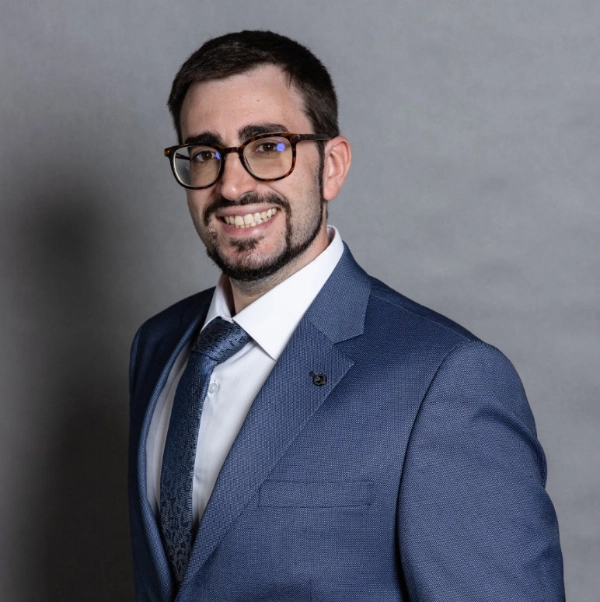
I am not just a developer. I am also the guy who will tell you when a feature is a bad idea.
In 12 years of experience, I've seen too many projects fail because of overly complicated apps. My approach from Bordeaux? We keep it simple. I work with startups and SMBs to build iOS and Android apps that get straight to the point.
I am your product partner. If an idea doesn't serve your users, I will tell you. In short: it's a matter of trust.
Publishing an app is 30% of the work. Maintaining it is the remaining 70%.
Most businesses in San Francisco celebrate their app launch on the stores.
And then? Nothing.
The code slowly rots. Nobody watches the crash reports. Nobody anticipates when a new version of iOS or Android changes the rules.
The app that was supposed to scale your business becomes a massive liability.
Let's look at reality.
You just bought a brand new car. If you never change the oil, the engine will seize in two years. For a mobile application, it is exactly the same concept.
The hidden cost of inaction is invisible at first, but it hits hard. Users hate broken software.
What is mobile app maintenance?
There is no single type of maintenance, but three distinct pillars. Each plays a crucial role in the survival of your project in San Francisco.
- Corrective maintenance. This is bug fixing. Your checkout button stopped working on Tuesday and 200 customers are blocked in California? This is calling the plumber for an emergency pipe burst.
- Adaptive maintenance. This is technological survival. Apple releases iOS 18 or new iPhone screen sizes. Your app suddenly relies on a deprecated API and the screen goes completely white. This is like putting winter tires on when the snow hits. Without it, you slide off the road.
- Evolutive maintenance. This is product growth. Your users demand a dark mode or biometric fingerprint login. This is like renovating your restaurant's dining room after five years. It was not broken, but it had become outdated compared to current expectations.
If you ignore these three pillars, the punishment from the market is immediate.
The key point: without corrective maintenance, you lose user trust (62% uninstall after a technical bug according to Statista, 2025). Without adaptive maintenance, your app eventually disappears from the stores. And without evolutive maintenance, your competitors in San Francisco simply overtake you.
A mobile application is a living digital product. The moment you stop taking care of it, technical debt accumulates. It is like termites in a wooden house. At first, you see nothing. Eventually, everything collapses.

Working with San Francisco
San Francisco is the one place where I am usually not the first developer someone has spoken to, and often not the first to have written code for the idea. Inheriting a half-finished app is a different job from starting one — the first week goes on reading what exists and telling you honestly which parts are worth keeping.
That week is not billable padding, it is the most valuable week of the project. There are really only three verdicts. The code is sound and undocumented, in which case we keep it and I write down how it works. The code is unsound but the data model is right, in which case we keep the database and rebuild above it, which is far cheaper than it sounds. Or the foundations are wrong, in which case the honest answer is to start again, and hearing that early costs you a week instead of a quarter.
The hardest part of that conversation is usually not technical. Someone has already paid for the existing work, and "start again" sounds like admitting the money was wasted. It usually was not: the existing version taught you what the product should be, which is exactly what a first attempt is for. But sunk cost is a poor reason to keep an architecture that will slow every future change, and I would rather have that argument in week one than deliver a build that stays fragile forever.
The nine-hour gap is real and shapes how we work. Our days barely overlap — your early morning is my evening. That suits a project with defined weekly deliverables you review at your desk and I act on the next day. It suits badly a project that needs live discussion to make progress. I will tell you which of the two yours is before we start, because getting that wrong wastes a month for both of us.
Why choose an expert in San Francisco?
You are launching your project in San Francisco.
And you are probably wondering who to work with to build your mobile app.
It is the first major decision you have to make. Some people think that to succeed, you absolutely need a big agency right around the corner. Others believe they should outsource to the cheapest team they can find overseas.
Both options come with serious tradeoffs.
A big agency will assign your project to a junior developer you have never met. An offshore team will deliver code you cannot read, three weeks behind schedule, with zero accountability.
The most important factor in the success of an app is not just the code. It is communication.
When you work with me, you get one dedicated expert with 12 years of experience and over 15 delivered projects. Not an account manager. Not a rotating team. One person who knows your project inside out.

Why Invent Better?
The work does not stop at publication. An app lives on systems that keep moving: iOS and Android each ship a major release every year, and an unmaintained app is eventually pulled from the stores. Invent Better plans for that in the original quote, rather than presenting it as a surprise six months after launch.
There is a very dangerous myth in the software industry. The belief that the work is completely finished the day your app goes live on the stores.
You push the launch button, the application becomes available in San Francisco, everyone drinks champagne, and the development agency completely vanishes to work on their next client.
That is the absolute worst thing that can happen to your business.
A mobile application is not a painting that you hang on a wall and never touch again. It is a living, breathing organism.
Operating systems update constantly. Apple and Google change their strict security guidelines. Brand new devices with weird screen sizes hit the market every single month. And your users constantly change their habits.
How does maintenance work?
What happens when your application completely crashes on a Tuesday morning? With a proper maintenance plan, the emergency response is codified and radically efficient for your business in San Francisco.
T+0 (The Alert): The monitoring probes detect an abnormal spike in crashes. I receive an immediate notification directly on my phone. You have not even opened your morning emails yet.
T+30min (The Diagnosis): I dive into the code. Is the problem coming from our app? From an external server that went down? From an unexpected iOS update? I isolate the root cause.
T+2h to 24h (The Fix): I write the technical solution. A bug blocking checkout payments is fixed the exact same day. A minor visual glitch will be scheduled for the next business day.
T+24h to 48h (The Deployment): The hotfix update is pushed to the stores. Google usually validates very quickly; Apple takes between 24 hours and a few days depending on review loads.
Case study
Preventive maintenance is what keeps your company off the front page of the local San Francisco news for all the wrong reasons.
During a routine takeover audit for a new client, I made a terrifying discovery. The application, built two years earlier by an agency that had since gone bankrupt, was storing user passwords in plain text directly in the local database.
This is a direct and massive GDPR violation. It is a flaw that could cost tens of thousands in regulatory fines, not to mention the total destruction of customer trust in the brand.
I immediately triggered an emergency protocol. I encrypted the local databases, implemented modern cryptographic hashing for all passwords, and forced a logout for all active users to secure their session tokens.
I then helped the client properly update their technical privacy policy documentation.
The result: Zero data breach. Zero fines. Zero scandals in California.
The maintenance investment
I do not quote maintenance without looking at the app first, because technical debt and traffic differ in every case. So I work in levels. The essential level covers monitoring, critical bug fixes, and keeping the app compatible with each new iOS and Android release. Higher levels add feature work on a predictable monthly basis.
I do not provide cookie-cutter quotes without seeing the patient first. Every app in San Francisco is unique, has different technical debt, and handles different traffic volumes. But here is how I structure my service levels.
The Essential level: This is life support. I provide 24/7 monitoring, fix critical blocking bugs, and ensure ongoing compatibility with new iOS and Android versions. Your app stays alive, functional, and compliant with store rules. It is your basic insurance policy.
Industries we serve
Every industry has its own technical emergencies. Maintaining an e-commerce app requires completely different reflexes than maintaining a medical platform in San Francisco.
Healthcare and Healthtech
There is absolutely no room for error. GDPR and HIPAA compliance audits must be constantly anticipated. Patient data security requires regular penetration testing to ensure the backend architecture remains bulletproof. I also actively maintain vital features like offline modes, which are essential for rural practitioners traveling across California.
Tourism and Hospitality
The rhythm is highly seasonal. The goal is to have a flawless, stress-tested application ready right before the summer or winter peaks in San Francisco. Maintenance focuses heavily on offline mode reliability (for foreign tourists without cellular data) and the real-time synchronization of booking databases. A crashing app in the middle of August is disastrous.
E-commerce and Retail
Frequently asked questions about mobile app maintenance in San Francisco
What does an app maintenance contract in San Francisco include?
It includes absolute technical peace of mind. Practically, it covers critical bug fixes, OS compatibility updates for new iOS/Android versions, and proactive live monitoring (using Crashlytics). It is the foundation for survival.
How fast do you fix a critical bug for businesses in San Francisco?
For blocking bugs (like a checkout crash), intervention happens in hours, not days. I isolate the root cause and push the hotfix to the stores immediately. Apple and Google then take over for the final review process.
Do you provide 24/7 monitoring for apps in San Francisco?
Yes, automated probes watch the code constantly. If the app collapses on a Sunday night in California, the system captures the logs instantly. I get the alert before your users even have time to complain.
How do you take over an existing app in San Francisco?
We always start with a deep technical audit. I read the code, map out the technical debt, and find the immediate security flaws. Then, we run a stabilization sprint. We build nothing new until the foundation is solid.
How often should I update my app in San Francisco?
The key point: Apple and Google release 4 to 6 major system updates every year. You must keep pace, or risk your application breaking entirely or being removed under the App Store Review Guidelines.
What happens if an iOS or Android update breaks my app in San Francisco?
This is exactly why maintenance exists. We anticipate these breaks using OS beta versions. If an unexpected break still happens in production, I deploy a rapid hotfix to restore access for your users immediately.
How do you monitor app crashes in San Francisco?
I embed professional tools like Sentry and Firebase Crashlytics. These silent digital probes tell me exactly which line of code failed and on which specific smartphone model, without the user lifting a finger.
Do you provide monthly reports to clients in San Francisco?
Absolutely. Trust requires total transparency. You receive a jargon-free summary: crashes prevented, bugs fixed, loading times tracked, and technical forecasts for the following month's roadmap.
Can I add new features as part of the maintenance in San Francisco?
Yes, this is called evolutive maintenance. Depending on our service agreement tier, we reserve a specific block of monthly hours exclusively dedicated to growing the app and building what your users request.
How do I cancel or change maintenance providers in San Francisco?
It is incredibly simple. You own 100% of your code and your administrator accounts (Apple, Google, Firebase). If you want to leave, I hand over updated documentation and you are free to go.
While you hesitate, your competitors in San Francisco are moving forward.
The mobile world moves fast. Very fast. Today, 63% of global web traffic comes from mobile devices (Statista, 2025). If you keep pushing back the creation of your app, someone else will happily take your spot in California.
But be careful, do not confuse speed with haste. Launching an unstable application is the worst possible strategy.
In short: you have to act fast, but above all, you have to do it right. ⏳