 Mickael Romaniello
30 minutes, no slides, nothing to prepare.
Mickael Romaniello
30 minutes, no slides, nothing to prepare.
Mickael Romaniello
30 minutes, no slides, nothing to prepare.
Mickael Romaniello
30 minutes, no slides, nothing to prepare.
12 years of experience. 15+ apps delivered. One dedicated point of contact.
In short: I build iOS and Android apps for clients in San Francisco (873,965 residents) and across California. One single point of contact, 12 years of experience, delivery from concept to publication in 8 to 16 weeks.
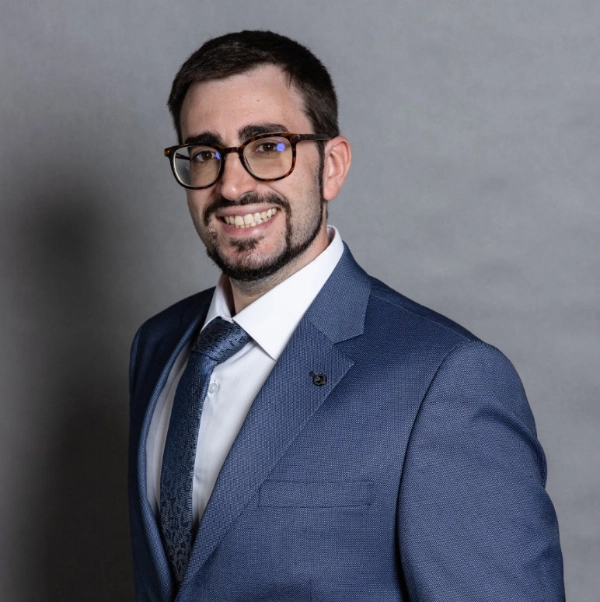
I am not just a developer. I am also the guy who will tell you when a feature is a bad idea.
In 12 years of experience, I've seen too many projects fail because of overly complicated apps. My approach from Bordeaux? We keep it simple. I work with startups and SMBs to build iOS and Android apps that get straight to the point.
I am your product partner. If an idea doesn't serve your users, I will tell you. In short: it's a matter of trust.
You are not looking for an agency. You are not looking for a code factory. You are looking for a partner.
I am a freelance mobile app developer.
The key advantage: you have one single point of contact from start to finish. Me.
No account manager acting as a buffer. No salesperson selling you impossible dreams. And most importantly, no junior developer hidden in the back room learning the trade on your dime.
Have an idea for the San Francisco market or for the rest of your United States? We discuss it directly.
Today, 63% of global web traffic comes from mobile devices (Statista, 2025).
Your future users are already on their phones.
But they are demanding.
Many people think a developer just types on a keyboard in a dark room.
That is not my vision of the job.
Being a mobile expert in San Francisco means mastering the product from A to Z.
I handle concept validation.
I think about user experience (UX).
I design the technical architecture.
I develop, test, publish to the stores, and provide ongoing maintenance.
The key point: no context is ever lost.
There are currently over 24,000 active Android device models worldwide (Google, 2025).
Making an app run flawlessly across all those screens requires absolute rigor.
It is not just about making things look pretty.
We must strictly follow Apple's Human Interface Guidelines and Google's Material Design.
The mobile user is on a train, in the street, or on their couch.
They do not want to think in order to navigate.
I ensure your interface is logical, instructive, and immediately understandable for your audience in the California area.
It is a comprehensive craft that demands a global vision of the mobile ecosystem.
This is exactly what I offer to businesses in San Francisco.
San Francisco is the one place where I am usually not the first developer someone has spoken to, and often not the first to have written code for the idea. Inheriting a half-finished app is a different job from starting one — the first week goes on reading what exists and telling you honestly which parts are worth keeping.
That week is not billable padding, it is the most valuable week of the project. There are really only three verdicts. The code is sound and undocumented, in which case we keep it and I write down how it works. The code is unsound but the data model is right, in which case we keep the database and rebuild above it, which is far cheaper than it sounds. Or the foundations are wrong, in which case the honest answer is to start again, and hearing that early costs you a week instead of a quarter.
The hardest part of that conversation is usually not technical. Someone has already paid for the existing work, and "start again" sounds like admitting the money was wasted. It usually was not: the existing version taught you what the product should be, which is exactly what a first attempt is for. But sunk cost is a poor reason to keep an architecture that will slow every future change, and I would rather have that argument in week one than deliver a build that stays fragile forever.
The nine-hour gap is real and shapes how we work. Our days barely overlap — your early morning is my evening. That suits a project with defined weekly deliverables you review at your desk and I act on the next day. It suits badly a project that needs live discussion to make progress. I will tell you which of the two yours is before we start, because getting that wrong wastes a month for both of us.
You are launching your project in San Francisco.
And you are probably wondering who to work with to build your mobile app.
It is the first major decision you have to make. Some people think that to succeed, you absolutely need a big agency right around the corner. Others believe they should outsource to the cheapest team they can find overseas.
Both options come with serious tradeoffs.
A big agency will assign your project to a junior developer you have never met. An offshore team will deliver code you cannot read, three weeks behind schedule, with zero accountability.
The most important factor in the success of an app is not just the code. It is communication.
When you work with me, you get one dedicated expert with 12 years of experience and over 15 delivered projects. Not an account manager. Not a rotating team. One person who knows your project inside out.
The work does not stop at publication. An app lives on systems that keep moving: iOS and Android each ship a major release every year, and an unmaintained app is eventually pulled from the stores. Invent Better plans for that in the original quote, rather than presenting it as a surprise six months after launch.
There is a very dangerous myth in the software industry. The belief that the work is completely finished the day your app goes live on the stores.
You push the launch button, the application becomes available in San Francisco, everyone drinks champagne, and the development agency completely vanishes to work on their next client.
That is the absolute worst thing that can happen to your business.
A mobile application is not a painting that you hang on a wall and never touch again. It is a living, breathing organism.
Operating systems update constantly. Apple and Google change their strict security guidelines. Brand new devices with weird screen sizes hit the market every single month. And your users constantly change their habits.
You know nothing about coding? That is perfect.
That is my job, not yours.
The key advantage of working with me is that I translate technology into clear business language.
We have regular check-ins. Video demonstrations where I show you what is working for your San Francisco market.
I explain what the bottlenecks are simply.
The absolute worst thing in a software project is silence.
Users are the same way: 96% of those who encounter a bug never report it (2025).
They simply leave the app.
That is why I always integrate professional analysis tools for crashes in the background, like an invisible smoke detector.
I keep you informed about your product's health across your United States without ever drowning you in incomprehensible terms.
We understand each other, we move fast, and we ship a robust product.
This approach makes all the difference for my clients in San Francisco.
One day, a startup founder contacted me with a massive document.
He wanted the ultimate app to disrupt his entire sector in San Francisco.
Dozens of screens, complex animations, an internal messaging system...
The most important factor was telling him no.
I reminded him that 80% of initially imagined features are never used by real people (Pendo, 2025).
We spent two days dissecting his idea.
We reduced the 50 pages down to just 5 fundamental screens.
The result? The app was developed and published in 10 weeks instead of 8 months.
He was able to test his concept in the market across his United States with real users.
He gathered data, and he pivoted his business model based on reality, not his assumptions.
He saved thousands by avoiding building a useless technical monster.
Businesses in San Francisco that understand this are already ahead.
With a freelance developer you pay for the work and nothing around it. An agency invoice also carries the office rent, the account manager's salary and the company margin, none of which show up in your app. The practical consequence is that more of the same budget reaches the build itself.
Let's talk about the true cost of a mobile app.
The key advantage of working with a freelance developer in San Francisco is that you pay solely for value.
With a large agency, your invoice absorbs the rent for their fancy offices, the foosball table, the account manager's salary, and the company's profit margin.
With me, you pay for expertise.
Every dollar invested goes directly into the code, design, and quality of your product.
You should not look for the absolute lowest price.
That is dangerous, because 77% of mobile users read reviews before downloading (Statista, 2025).
I have worked with a wide variety of clients. The fundamental principles of a great app remain the same, regardless of the sector.
The difference lies in the specific business logic of your industry in San Francisco.
For commerce, friction is public enemy number one.
The most important factor is the fluidity of the checkout process.
If the user has to fill out 15 fields on their small screen to pay, they will leave.
I design purchasing journeys that actually convert.
It is worth noting that iOS users spend on average 2x more inside apps than Android users.
The experience on iPhones must be absolutely perfect.
If you sell a service in the California area, the app must simplify your customers' lives.
Booking an appointment or a service should take exactly three clicks.
We integrate Apple Pay and Google Pay to eliminate the credit card barrier.
We make the experience completely obvious.
This approach makes all the difference for my clients in San Francisco.
Communication. With me, you speak directly to the person writing the code. There is no broken telephone with a project manager. Decisions are made quickly. In short: you save time and you do not pay for the overhead costs of a large company.
Never more than 2 or 3 active development projects simultaneously. This is a strict rule. Development requires intense concentration. If I took on 10 projects like some code factories in San Francisco, the quality would plummet. I always prioritize excellence over quantity.
I primarily work on a fixed-price basis for well-defined projects, or on a time-and-materials basis if we are in an exploration phase or ongoing maintenance. We lay everything out clearly in a specification document right from the start.
Yes, absolutely. Today, you cannot ignore either platform given the 6.3 billion smartphone users worldwide (Statista, 2025). I develop natively or with Flutter depending on the strategic needs of your United States.
That is exactly why you watch the app grow on your own phone during the creation phase. There is no "black box" effect and no unpleasant surprises at the end. We validate every single step together.
While you hesitate, your competitors in San Francisco are moving forward.
The mobile world moves fast. Very fast. Today, 63% of global web traffic comes from mobile devices (Statista, 2025). If you keep pushing back the creation of your app, someone else will happily take your spot in California.
But be careful, do not confuse speed with haste. Launching an unstable application is the worst possible strategy.
In short: you have to act fast, but above all, you have to do it right. ⏳
30 minutes to start
Book →Most of my projects run remotely, and in practice that changes very little. We talk over video whenever you need to, not only at major milestones, and you can reach me with questions at any point during the project — I always answer.
Once we are working together, travelling to meet you on site can absolutely be arranged if your project calls for it. Travel costs are quoted separately, upfront and with no surprises.