Mobile App Maintenance in New York

12 years of experience. 15+ apps delivered. One single point of contact, from concept to App Store and Google Play publication.

📱 iOS & Android 🚀 12 years experience 🇫🇷 Based in France
Book a 30-minute call →
Invent Better mascot

In short: for your New York (8,336,817 residents) project, you work directly with me, not a middleman. 12 years of experience, 15+ apps delivered, and a transparent end-to-end process.

Publishing an app is 30% of the work. Maintaining it is the remaining 70%.

Most businesses in New York celebrate their app launch on the stores.

And then? Nothing.

The code slowly rots. Nobody watches the crash reports. Nobody anticipates when a new version of iOS or Android changes the rules.

The app that was supposed to scale your business becomes a massive liability.

Let's look at reality.

You just bought a brand new car. If you never change the oil, the engine will seize in two years. For a mobile application, it is exactly the same concept.

The hidden cost of inaction is invisible at first, but it hits hard. Users hate broken software.


What is mobile app maintenance?

Forget about code for a minute. Let's use a car analogy to understand the real stakes in New York.

The oil change represents security patches. You do not see the clean oil when you drive. It does not make the car go any faster. But if you skip it, the engine seizes in the middle of the highway. In an app, this is what protects your users' private data.

Rotating your tires represents OS compatibility updates. When Apple or Google release a major system update, the rules of the road change. If your app keeps its old tires, it will crash. We have to adapt the code so it keeps driving straight.

The annual inspection is the technical audit. Once a year in New York, we look under the hood. We analyze load performance, database query speed, code cleanliness, and crash rate trends.

Roadside assistance is the emergency fix. A critical bug blocks all payments on a Friday night? I am on it within hours. We fix it, we restart.

Mascot

The key point: the price depends on the technical complexity under the hood, not on the number of pages.

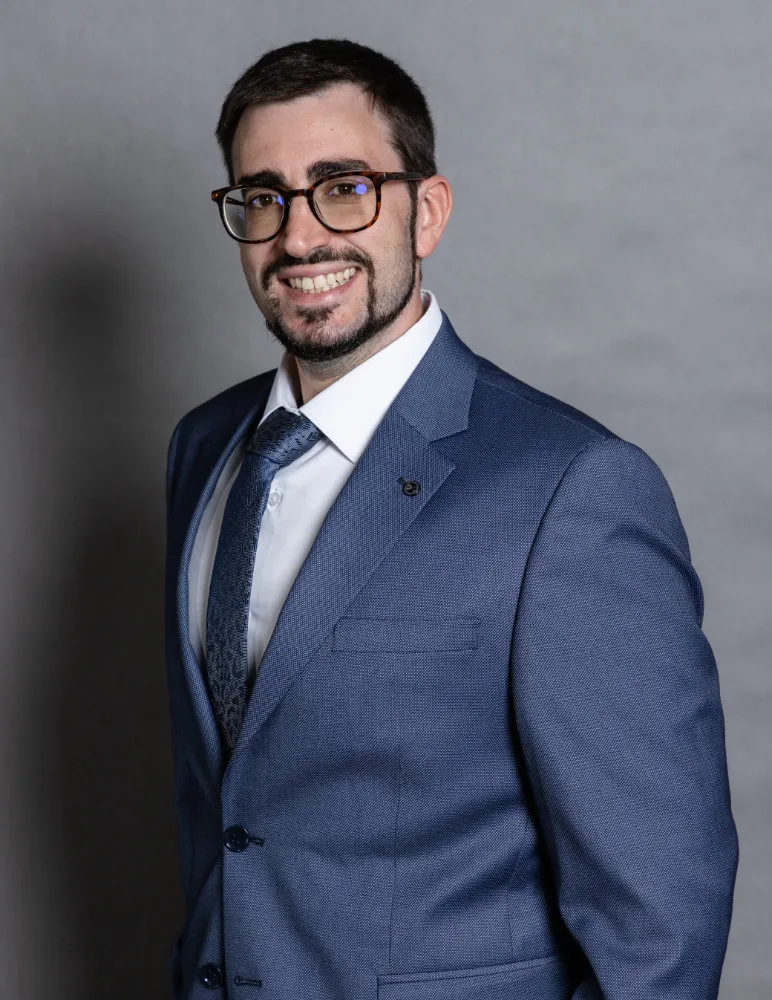
Mickael Romaniello
Mickael Romaniello
Mobile Product Engineer — Bordeaux, France

Based in Bordeaux, I work with clients all over France and internationally. But distance changes nothing about my level of commitment.

For 12 years, I've been creating iOS and Android apps for SMBs and startups by putting human connection first. I immerse myself in your projects as if they were my own. You have my direct number, we call each other when needed, and we move forward together.

The most important factor for a successful application comes first from a great human relationship. That is the core of my approach.

12+
years experience
15+
projects delivered
5
industries served
4.8
average rating

Why choose an expert in New York?

I have guided dozens of clients over the past 12 years. And I know exactly what the number one fear is when launching an app project.

It is the fear of losing control.

You hand over your baby, sign an estimate, and then hear absolutely nothing for three months. You become entirely dependent on a technical black box. 🕵️‍♂️

The key advantage of our collaboration is total transparency.

Even if I am not physically sitting in your office in New York, you see absolutely everything that is happening.

To achieve this, we set up simple and highly effective workflows.

Working with New York

New York clients tend to arrive with the product already decided and a date attached to it. That is workable, but the date is the thing to be honest about first: an App Store review is not something either of us controls, and planning a launch without a week of slack in it is how a good build turns into a bad launch.

Review is the part people underestimate because it is invisible until it bites. Most submissions clear in a day or two, some take a week, and a rejection over something small — a missing privacy declaration, an account you cannot delete from inside the app, a sign-in option that Apple requires alongside yours — sends you back to the end of the queue. None of those are hard to fix. All of them are expensive on the Tuesday before a launch event, which is why I check them weeks earlier rather than at submission.

The six-hour difference is the other structural fact. Your morning is my afternoon, which gives us roughly three hours of genuine overlap every day. That is enough for a daily question and a weekly call, and it is not enough for a project that needs constant conversation. The pattern that works is a written decision log and a build you can install on your own phone every week — you review in your morning, I act on it in mine, and nothing waits a full day for an answer.

One more thing specific to New York: I am often not the only person quoting. Agencies here will present a team, a process and an account manager, and they are not lying about what that buys. What it does not buy is the person writing the code sitting in the conversation where the decision is made. On a first product, where most of the important choices are made in the first six weeks, that proximity is usually worth more than the headcount.


Mascot

Why Invent Better?

The work does not stop at publication. An app lives on systems that keep moving: iOS and Android each ship a major release every year, and an unmaintained app is eventually pulled from the stores. Invent Better plans for that in the original quote, rather than presenting it as a surprise six months after launch.

There is a very dangerous myth in the software industry. The belief that the work is completely finished the day your app goes live on the stores.

You push the launch button, the application becomes available in New York, everyone drinks champagne, and the development agency completely vanishes to work on their next client.

That is the absolute worst thing that can happen to your business.

A mobile application is not a painting that you hang on a wall and never touch again. It is a living, breathing organism.

Operating systems update constantly. Apple and Google change their strict security guidelines. Brand new devices with weird screen sizes hit the market every single month. And your users constantly change their habits.


How does maintenance work?

What happens when your application completely crashes on a Tuesday morning? With a proper maintenance plan, the emergency response is codified and radically efficient for your business in New York.

T+0 (The Alert): The monitoring probes detect an abnormal spike in crashes. I receive an immediate notification directly on my phone. You have not even opened your morning emails yet.

T+30min (The Diagnosis): I dive into the code. Is the problem coming from our app? From an external server that went down? From an unexpected iOS update? I isolate the root cause.

T+2h to 24h (The Fix): I write the technical solution. A bug blocking checkout payments is fixed the exact same day. A minor visual glitch will be scheduled for the next business day.

T+24h to 48h (The Deployment): The hotfix update is pushed to the stores. Google usually validates very quickly; Apple takes between 24 hours and a few days depending on review loads.

Process mascot

A transparent, iterative process with zero surprises. You see the app grow every single week.


Case study

A year ago, a local company from New York contacted me in a panic. Their mobile app was crashing over 40 times a day. Their store rating had plummeted to 2.1 stars. Negative reviews were pouring in, and the CEO was seriously considering shutting down the entire project.

Let's look at the facts.

I requested access to the code for a full one-week technical audit. The user interface was actually quite good, and the core idea was solid. The problem came from the foundations: deprecated libraries and terrible memory management.

I did not propose rebuilding from scratch. It was completely unnecessary.

I simply rewrote the critical 30% of the codebase: the authentication flow and the checkout process. I hooked up Crashlytics to monitor what was happening live. I added robust automated tests to protect these specific user journeys.

Mascot

In short: we do not build everything. We build what your users actually need.


The maintenance investment

Maintenance is easier to price against the cost of doing nothing. What does one day of downtime cost you? If checkout crashes, that is revenue lost outright. An unmaintained app also drifts out of compatibility with each annual iOS and Android release, and is eventually pulled from the stores.

I refuse to talk about maintenance as a "cost." It is a massive defensive investment for your business in New York.

To understand why, you have to look at the exorbitant price tag of technical inaction:

How much does a single day of downtime cost you? If your e-commerce checkout crashes, that is raw revenue burning in real time. If your booking service goes offline, your customers go straight to the competitor across New York.


Industries we serve

The long-term survival of an application depends entirely on its ability to handle the specific, heavy usages of its industry in New York.

Education and EdTech

Content delivery optimization is vital. Video lessons and heavy PDFs can cause the app size to bloat over time. I monitor video streaming performance and the rock-solid reliability of offline downloads for students across New York. The parental notification system must also remain perfectly synced through every single iOS and Android update.

Food Service and FoodTech

The app must be an absolute rock during peak rush hours (12-2 PM and 7-9 PM). Active maintenance ensures the total reliability of the order flow under heavy server load. I track GPS API accuracy for delivery drivers, and I maintain the fragile technical bridges between the mobile app and the restaurant's Point of Sale (POS) software. A bug here destroys the dinner service.

Logistics and Transportation


Frequently asked questions about mobile app maintenance in New York

What does an app maintenance contract in New York include?

It includes absolute technical peace of mind. Practically, it covers critical bug fixes, OS compatibility updates for new iOS/Android versions, and proactive live monitoring (using Crashlytics). It is the foundation for survival.

How fast do you fix a critical bug for businesses in New York?

For blocking bugs (like a checkout crash), intervention happens in hours, not days. I isolate the root cause and push the hotfix to the stores immediately. Apple and Google then take over for the final review process.

Do you provide 24/7 monitoring for apps in New York?

Yes, automated probes watch the code constantly. If the app collapses on a Sunday night in New York, the system captures the logs instantly. I get the alert before your users even have time to complain.

How do you take over an existing app in New York?

We always start with a deep technical audit. I read the code, map out the technical debt, and find the immediate security flaws. Then, we run a stabilization sprint. We build nothing new until the foundation is solid.

How often should I update my app in New York?

The key point: Apple and Google release 4 to 6 major system updates every year. You must keep pace, or risk your application breaking entirely or being removed under the App Store Review Guidelines.

What happens if an iOS or Android update breaks my app in New York?

This is exactly why maintenance exists. We anticipate these breaks using OS beta versions. If an unexpected break still happens in production, I deploy a rapid hotfix to restore access for your users immediately.

How do you monitor app crashes in New York?

I embed professional tools like Sentry and Firebase Crashlytics. These silent digital probes tell me exactly which line of code failed and on which specific smartphone model, without the user lifting a finger.

Do you provide monthly reports to clients in New York?

Absolutely. Trust requires total transparency. You receive a jargon-free summary: crashes prevented, bugs fixed, loading times tracked, and technical forecasts for the following month's roadmap.

Can I add new features as part of the maintenance in New York?

Yes, this is called evolutive maintenance. Depending on our service agreement tier, we reserve a specific block of monthly hours exclusively dedicated to growing the app and building what your users request.

How do I cancel or change maintenance providers in New York?

It is incredibly simple. You own 100% of your code and your administrator accounts (Apple, Google, Firebase). If you want to leave, I hand over updated documentation and you are free to go.

Ready to launch your app in New York?

You have the idea. You know your market in New York. Now, it is time to take action.

But not just in any random way. The key advantage of working together is absolute clarity. I will not sell you useless features. I will not make empty promises that I cannot keep.


Invent Better mascot

Ready to launch your project?

In 30 minutes, you will know exactly where to start. No commitment. No technical jargon.

Book a free call →

30 minutes to start your project

Book a free call →

Working together remotely

Most of my projects run remotely, and in practice that changes very little. We talk over video whenever you need to, not only at major milestones, and you can reach me with questions at any point during the project — I always answer.

Once we are working together, travelling to meet you on site can absolutely be arranged if your project calls for it. Travel costs are quoted separately, upfront and with no surprises.

Message on WhatsApp

About the author

Mickael Romaniello — Mobile product engineer based in the South of France. 12 years building iOS, Android and desktop apps. 15+ projects delivered for startups, mid-market companies and enterprise clients. LinkedIn.

Last updated:

Standards & references

Apple Human Interface Guidelines · Google Material Design · web.dev (Google) · MDN Web Docs · OWASP Mobile Top 10