 Mickael Romaniello
30 minutes, no slides, nothing to prepare.
Mickael Romaniello
30 minutes, no slides, nothing to prepare.
Mickael Romaniello
30 minutes, no slides, nothing to prepare.
Mickael Romaniello
30 minutes, no slides, nothing to prepare.

One single point of contact, from concept to publication. 12 years of experience. 15+ apps delivered.
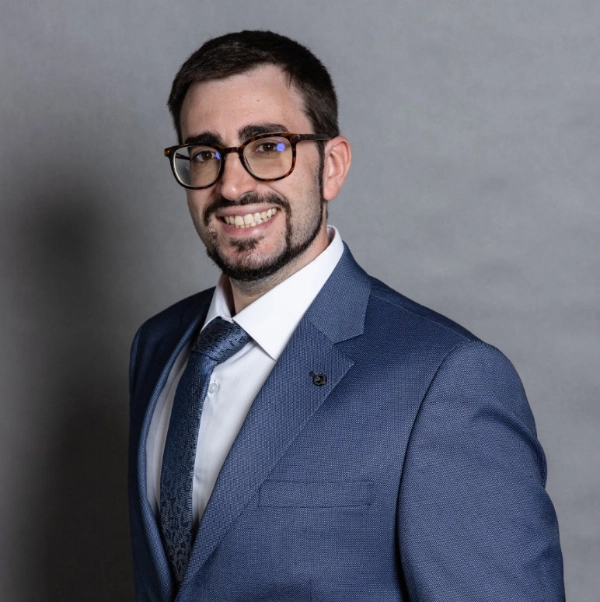
In short: I build iOS and Android apps for clients in Los Angeles (3,979,576 residents) and across California. One single point of contact, 12 years of experience, delivery from concept to publication in 8 to 16 weeks.
You are based in Los Angeles and you have a mobile app idea.
It is the classic scenario. Enthusiasm is at its peak. You are already picturing your logo on everyone's home screen across California.
The journey between an idea on a napkin and a published app on the stores is long. Very long.
Spoiler: the vast majority of app projects never reach profitability. Not because the initial idea was bad, but because the execution was a mess.
How do we actually build an application in Los Angeles? It is not just a developer locked in a basement typing random code. It is an industrial, creative, and highly rigorous process.
If you want your project to survive in California, you must follow four major manufacturing steps.
Here is how it really happens.
The first step is concept validation. What precise problem does your application solve? For whom? You must be able to answer in a single sentence. If it is too vague, that is a bad sign. Spoiler: trying to build a Swiss Army knife is a fatal mistake. Knowing that 80% of app features are never actually used (Pendo, 2025), we are going to prune your idea to keep only the pure value.
The second step is technical architecture and design. Before building a house in Los Angeles, you draw blueprints. It is exactly the same here. We choose the right engine for your app, whether that is native code like Swift or Kotlin, or hybrid tech like Flutter. We design the screens following strict ergonomic rules, taking inspiration from standards like Google's Material Design. We build solid foundations before we start painting the walls.
Some of my clients have been working with me for years. Why? Because I don't vanish into thin air once the iOS or Android app is published.
Based in Bordeaux, I support my clients over the long haul. During my 12-year career, I've learned that launching an app is just the beginning of the story. You have to improve it, maintain it, and listen to the users.
The most important factor is this rigorous follow-up. I am here to stand by you for the long term, like a true partner. It's a matter of trust.
I have guided dozens of clients over the past 12 years. And I know exactly what the number one fear is when launching an app project.
It is the fear of losing control.
You hand over your baby, sign an estimate, and then hear absolutely nothing for three months. You become entirely dependent on a technical black box. 🕵️♂️
The key advantage of our collaboration is total transparency.
Even if I am not physically sitting in your office in Los Angeles, you see absolutely everything that is happening.
To achieve this, we set up simple and highly effective workflows.
Los Angeles brings a lot of media and entertainment work, where the app is one piece of something larger and the brand is already fixed. That is easier than it sounds: when the design language exists, the arguments about colour and type never happen, and the whole conversation stays on what the thing actually does.
It brings its own discipline, though. A brand built for print and film does not always survive contact with a phone. Type set at a weight that looks elegant on a poster can be unreadable at arm's length on a bright screen; a palette with beautiful low-contrast pairings can fail basic accessibility; a logo designed for a title card does not shrink to a tab bar icon. My job on those projects is often to protect the brand from a literal translation of itself, and to propose the smallest adjustments that keep the identity intact while making the screen usable.
Media projects also tend to be heavy with video and images, which is where mobile performance is actually won or lost. Full-resolution assets on a list view make an app that stutters and a data plan that evaporates. The work that matters here is invisible: resizing on the server, loading progressively, caching properly, and never blocking the interface while something downloads. It is unglamorous, and it is the difference between an app people keep and one they delete after a week.
The nine-hour gap means our working days do not really meet — your morning is my evening. That works well with a rhythm of weekly deliverables you review at your desk and I act on overnight, and it works badly with a project that needs live back-and-forth to move. If yours is the second kind, someone in your timezone will serve you better and I will say so rather than take the work.
An app can be built fast and cheap. What costs money is what comes next: code written without structure becomes impossible to change, and the smallest new feature means starting over. Invent Better charges for the work that makes a second version possible — tests, a readable architecture, and code another developer can pick up.
It is entirely possible to build a mobile application extremely fast and for very little money.
All you have to do is ignore every best practice, copy and paste random blocks of code from the internet, and cross your fingers hoping it holds together. On the day of your big presentation in Los Angeles, the app will probably look fine.
But that thin layer of paint will crack almost immediately.
The second you get more than ten users trying to log in at the same time, the system will crawl to a halt. On mobile devices, user patience is brutally short. And slowness is always perceived as a broken product.
You do not need to be in the same office to build an excellent application.
Today, the digital economy in Los Angeles operates without borders. But for remote work to be truly effective, you need military-grade organization. Technical chaos is incredibly expensive.
The key advantage of my approach is absolute transparency. Here is how we will collaborate, even if hundreds or thousands of miles separate us.
Let's start with the tools. There are no black boxes with me.
For design, I work code-first with visual mockups validated with you. For projects requiring specialized UX/UI work, I partner with a trusted designer. You can click through them, leave comments directly on specific buttons, and validate the interface before I ever write a single line of code.
For the code itself, I use GitHub. You have full access to the engine room. You are the sole owner of your product from A to Z.

Sometimes, the worst enemy of a project is a deal that seems too good to be true. A tech company contacted me in total panic.
They had inherited a mobile app developed by a very cheap offshore team. The result? The application was crashing more than forty times a day.
The store rating had plummeted to 2.1 stars. Users were leaving disastrous one-star reviews on a daily basis. The CEO was ready to throw the entire thing in the trash.
This is a critical situation, because we know that 77% of users read reviews before downloading an application (Statista, 2025). The company's reputation was collapsing.
The technical challenge was heavy. The codebase was pure spaghetti code. There was no documentation, no automated testing, and no monitoring tools. Fixing a simple color bug would create three new crashes somewhere else.
There is no single price for a mobile app, for the same reason there is no single price for a house. What sets the figure is scope: how many screens, whether it needs a server and user accounts, and whether it ships on one platform or two. A short scoping call is enough to put a real range on your project rather than a brochure number.
You are launching your project in Los Angeles and the very first question that comes to mind is inevitably about the budget.
That is perfectly normal. But asking how much a mobile app costs is exactly like asking how much a house costs in California. A small, functional studio apartment and a forty-room castle are simply not the same project.
Here is what actually determines the budget for a mobile application. 💶
Three main factors influence the cost of your project in Los Angeles:
The healthcare sector leaves absolutely no room for error. Building a medical app for patients or doctors in California is not just about coding a pretty interface. It is about building a digital vault.
You have to seamlessly manage patient follow-ups, appointment bookings, medication reminders, and secure messaging. Strict compliance with data protection laws is non-negotiable. That is why we integrate heavy biometric authentication systems.
And let's not forget offline mode, which is absolutely vital for a rural doctor consulting in an area with poor signal.
If you are targeting travelers visiting Los Angeles, your application must be their ultimate guide. And a guide that stops working the moment you cross a border is completely useless.
Offline mode is a matter of survival here to help your customers avoid roaming charges. They must be able to check a real-time itinerary or scan a QR code ticket even without an internet connection.
You have a single direct point of contact from start to finish. In a large agency, you pay the salary of the sales rep, the project manager, the art director, and finally the junior developer who actually writes the code. With an experienced freelancer, there are absolutely no middlemen. I design, I architect, I code, and I publish. Decisions are made quickly over video calls. This drastically reduces your overhead costs while ensuring that the person who truly understands your business goals is the one typing on the keyboard.
Native means the app is coded specifically for one single system, using Swift for Apple or Kotlin for Google. Hybrid uses a common language, like Flutter, to generate two full apps from one single codebase. Native offers maximum peak performance for heavy gaming or intense tools. But let's be clear, hybrid currently covers 80% of business needs with quality that is totally indistinguishable to the end user. The key advantage of hybrid is financial: you practically cut your project's development time across our United States in half.
Maintenance represents an essential part of your app's overall budget. It covers mandatory iOS and Android system updates, patching security flaws, and adjusting layouts for new screen sizes. Data shows that 53% of users flee if loading exceeds three seconds (Google, 2025). Without maintenance, your app slows down and eventually dies. The exact amount depends on the size and complexity of your project. We discuss it together during our first call.
A full technical audit takes exactly one week. You grant me access to your source code and your crash analytics. I comb through every single line of code. I analyze the technical architecture, security protocols, and performance metrics. At the end of this week, I hand you a detailed and highly incisive report. It includes a prioritized list of critical bugs to fix immediately, actionable recommendations, and a concrete repair estimate. It is the mandatory tool to know if your app can be saved or if it must be rebuilt.
That is exactly my working method and the most highly recommended strategy. Knowing that 80% of features planned in advance are never actually used (Pendo, 2025), trying to build everything at once is financial suicide. We launch a Minimum Viable Product (MVP) containing only the three to five vital functions in eight to ten weeks. Then, we analyze how your real users interact with the product. We iterate based on hard data, not wild guesses. This is how you build a true market leader.
Delays range from a quick twenty-four hours at Apple to a mandatory, non-negotiable fourteen days at Google. Apple reviews your code very manually to ensure strict compliance with their design and technical guidelines. Google now forces all brand-new apps to be actively tested by twenty different people for two consecutive weeks before allowing a public release. Be warned, during the holiday season, these delays can easily triple. I anticipate all these bottlenecks so your launch in California happens exactly on the planned date.
ASO (App Store Optimization) is the specific SEO for app stores. It is the exact engine that makes you visible. We optimize your title, subtitle, hidden keywords, and we design highly impactful screenshots. Most importantly, we set up automated strategies to harvest positive reviews. The statistics are brutal: 77% of users read reviews before they even hit the download button (Statista, 2025). A bad rating condemns you to total invisibility. I guide you through this critical phase so your application is easily found.
Yes, if your users are at risk of losing their cellular connection in a basement, on the subway, or while traveling abroad without roaming data. Offline mode securely stores essential data directly on the phone and syncs it silently the second the network returns. You must anticipate this. The key advantage is a totally frictionless experience, but adding it after launch easily costs three to five times more than planning it in the initial architecture. Let's discuss your users' actual field reality to make the right call.
Ready to launch your app in Los Angeles?
You have the idea. You know your market in California. Now, it is time to take action.
But not just in any random way. The key advantage of working together is absolute clarity. I will not sell you useless features. I will not make empty promises that I cannot keep.

In 30 minutes, you will know exactly where to start.
Book a free call →30 minutes to start your project
Book a free call →Most of my projects run remotely, and in practice that changes very little. We talk over video whenever you need to, not only at major milestones, and you can reach me with questions at any point during the project — I always answer.
Once we are working together, travelling to meet you on site can absolutely be arranged if your project calls for it. Travel costs are quoted separately, upfront and with no surprises.