 Mickael Romaniello
30 minutes, no slides, nothing to prepare.
Mickael Romaniello
30 minutes, no slides, nothing to prepare.
Mickael Romaniello
30 minutes, no slides, nothing to prepare.
Mickael Romaniello
30 minutes, no slides, nothing to prepare.
12 years of experience. 15+ apps delivered. One single point of contact, from concept to App Store and Google Play publication.
In short: for your Birmingham (1,144,900 residents) project in England, you work directly with me, not a middleman. 12 years of experience, 15+ apps delivered, and a transparent end-to-end process.
Look around a meeting room in Birmingham.
What do people put on the table?
iPhones.
If you are targeting professionals, decision-makers, or executives, the Apple ecosystem is essential.
In short, the iPhone is often the default device in the corporate world.
The environment is secure, closed, and controlled.
Building a native iOS app means ensuring your product fits perfectly into the daily lives of these users.
It means using the visual cues they are used to.
If your interface is messy, they will not trust your service.
I help you design and develop an iOS app in Birmingham that radiates professionalism.
An app that responds instantly, without friction, and enhances your brand image.
iOS development is not just coding for a different phone.
It is adopting an entire philosophy.
Apple's philosophy.
Apple controls everything. The hardware (iPhone, iPad) and the software (iOS).
The key point is that this strict control is a massive strength for us.
Unlike Android, where we have to test on thousands of different screens, the iOS universe is much more constrained.
This allows us to achieve an exceptional level of polish for every screen of your application in Birmingham.
To code, we use the official languages: Swift and SwiftUI.
SwiftUI is Apple's modern standard. It is clean, fast, and built to create smooth interfaces.
But code is not everything.
A good iOS app must respect Apple's Human Interface Guidelines.
This is the design bible at Apple.
It dictates the size of buttons, how menus should open, and the margins to respect.
Why does this matter?
Because iOS users spend 2x more in-app than Android users.
They pay more, but they demand a perfect experience.
If your app does not look like an Apple app, the user will feel it immediately.
They will be confused. They click. They quit. They forget.
My job as an iOS developer is to melt your idea into this premium mold.
We create a product that feels native, natural, and reassuring for your target audience in Birmingham.
The key point: the price depends on the technical complexity under the hood, not on the number of pages.
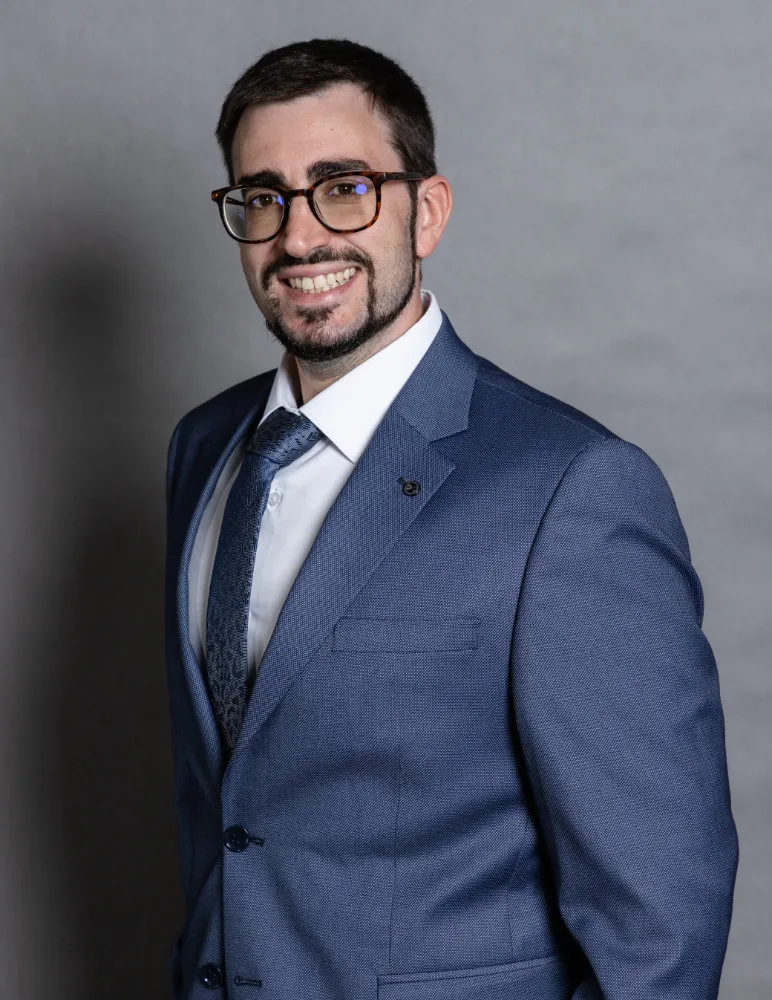
No agency. No sales rep. No project manager standing between us.
When you work with me, you talk directly to the person building your app. For 12 years, I have managed the creation of iOS and Android applications from A to Z from my office in Cannes. That means faster responses, less talk, and zero bad surprises on the invoice.
The key point: we save an incredible amount of time. I advise you, I design, and I develop with total transparency. It really is that simple.
The number one fear when starting an app project is losing control: you sign an estimate, hand over your idea, and hear nothing for three months. The way of working described here exists so that does not happen.
Three rules, the same on every project:
You test the app on your own phone every two weeks.
Birmingham work often comes from businesses with a physical operation behind the app — logistics, retail, trades. Those projects live or die on whether the app works with no signal in a warehouse or a van, and that decision has to be made in week one, because it shapes how everything stores data.
The reason it cannot wait is structural. An app that assumes a connection asks the server for what it needs and shows the answer. An app that works offline keeps its own copy of the data, decides what to do when two people change the same record in different places, and syncs in the background without the user thinking about it. Those are not the same app with a feature added; they are different architectures. Retrofitting the second onto the first is usually a rewrite, and I would rather tell you that in the first meeting than in the fourth month.
Businesses with vans and depots also have a second constraint that catches people out: the phone is not a desk. It is used one-handed, sometimes in gloves, sometimes in rain, often by someone who did not choose the app and does not want to be learning software. That pushes hard toward fewer screens, bigger targets, and as little typing as possible — scanning, picking from a list, or tapping a single obvious button. An app that requires careful input on a loading bay gets filled in later at the desk, from memory, which means your data is wrong.
Birmingham is also a genuinely multilingual city, and for a consumer-facing product that is worth a deliberate decision rather than a default. Shipping in English only is a perfectly reasonable choice; discovering after launch that a third of your intended users struggle with the sign-up form is not. Deciding it at the start costs a conversation. Deciding it afterwards costs a redesign, because screens laid out for English rarely hold a longer language without breaking.
An app can be built fast and cheap. What costs money is what comes next: code written without structure becomes impossible to change, and the smallest new feature means starting over. Invent Better charges for the work that makes a second version possible — tests, a readable architecture, and code another developer can pick up.
It is entirely possible to build a mobile application extremely fast and for very little money.
All you have to do is ignore every best practice, copy and paste random blocks of code from the internet, and cross your fingers hoping it holds together. On the day of your big presentation in Birmingham, the app will probably look fine.
But that thin layer of paint will crack almost immediately.
The second you get more than ten users trying to log in at the same time, the system will crawl to a halt. On mobile devices, user patience is brutally short. And slowness is always perceived as a broken product.
Publishing an app with Apple requires anticipating their strict rules.
Spoiler: we do not discover the constraints at the end of the project.
The key point is to prepare the groundwork from the start.
First, the design.
We validate together that your idea respects Apple's guidelines for your target audience in Birmingham.
Then, the administrative steps.
You need an Apple Developer account. And a DUNS number to open it under your company name.
While the paperwork processes, I develop.
This is the intensive coding phase in Swift and SwiftUI.
Very quickly, we move onto TestFlight.
This is Apple's app that allows you to install test versions on your own phone.
We can even invite your first testers in Birmingham to gather their feedback before release.
Next comes the App Store Connect stage.
This is the dashboard where we configure your App Store listing.
We must fill out the privacy labels (what the app tracks or not) with surgical precision.
Finally, the submission.
Know that nearly one submission in four is rejected.
If this happens, do not panic.
We analyze the Apple reviewer's feedback, fix the blocking issue, and resubmit.
We move forward step by step until the official publication.

A transparent, iterative process with zero surprises. You see the app grow every single week.
The healthcare sector demands absolute rigor.
Here is a case that comes up often: a connected medical tracking app.
On iOS, health has its own ecosystem: HealthKit.
The goal was to synchronize Apple Watch data (heart rate, sleep) with a simple and secure patient interface.
The key advantage here is the data protection offered by Apple.
We built a completely native architecture in Swift.
Security and privacy had to be flawless to pass the App Store review.
Apple is extremely strict about medical apps. nearly one submission in four is rejected, and this number is even higher for healthcare.
So we bulletproofed the permissions and the privacy questionnaire on App Store Connect.
The application was tested intensively via TestFlight by a small panel of patients.
The result?
Apple approval secured on the first try.
Today, the app holds a 4.8/5 rating on the App Store, driven by the ultra-smooth experience typical of iOS.
This is the level of excellence I apply for my clients in Birmingham.

In short: we do not build everything. We build what your users actually need.
Quotes for an iPhone app can vary by a factor of three, which mostly tells you they are not describing the same work. A very low price usually means no real Swift expertise and no working knowledge of App Store review. The cost of a rejected submission is not the rebuild — it is the launch date you miss.
You will find quotes ranging from low to triple in Birmingham for an iOS application.
If someone offers you an iPhone app at a ridiculously low price, be careful.
Creating for Apple requires real technical expertise in Swift and a perfect knowledge of the App Store.
In short, you do not just cobble together an iOS application.
Apple processes 100,000+ app submissions per week.
Their teams will not hesitate to block poorly finished or non-compliant apps.
A low-cost developer will ignore these rules to move faster.
Certain business models naturally align with the Apple universe.
In short, here is why these sectors prioritize the iPhone.
A clientele traveling with a significant budget often owns an iPhone.
The native iOS interface allows for a smooth booking experience, rich notifications with images, and ultra-precise geolocation.
Apple processes 100,000+ app submissions per week, and smooth travel apps are always highlighted.
The continuity between the Mac, iPad, and iPhone is Apple's great strength.
If you create a productivity tool for businesses in Birmingham, the iOS app is the gateway.
Executives run their companies from their iPhones.
Ordering a car, a meal, a cleaning service.
Apple Pay integration reduces payment friction to zero.
The user does not type their credit card. They validate with Face ID, and the service is ordered.
One condition and three criteria. The condition is frequency: an app lives on a home screen, and an icon opened once a year never pays for itself. If your customers come back weekly, one criterion out of three is then enough — it uses the phone itself, it has to work with no network, or it has a legitimate reason to bring people back. Otherwise a website does the same job for less, and I will say so.
An app idea cannot be patented as such; what can be protected is the name — a registered trademark — and the code, covered by copyright from the moment it is written. In practice the risk is almost never theft: it is taking six months to ship while someone else takes two. If it worries you, a non-disclosure agreement can be signed before the first call, without difficulty.
No, and starting without one is healthier. Scoping is about what the app does and for whom; the styling comes after, and it comes out better once the screens are known. If you already have an identity, we use it. If not, the first version can be plain and legible — which is not a fallback: plenty of apps would be better off staying that way.
Yes, and it is often the best money in the project. Clickable mockups put in front of ten people reveal in a week what a three-month build would reveal too late. You see where people hesitate, what they cannot find, what they do not care about. It is also what lets you remove features before paying for them rather than after.
Yes, always, and this is the one point I do not bend on. Both accounts are paid and created under your company's name; I work on them with delegated access. An app published under a provider's account is an app you do not control: you can neither update it nor transfer it without them. Apple's side takes a while to set up, so start early.
As late as possible. A sign-up screen on opening is the first cause of abandonment: the person has seen nothing yet and you are already asking for something. The good rule is to let them try, then ask for an account when it becomes useful — to find their data on another device, to pay, to be recognised. Plenty of apps gain users simply by moving that screen.
The simple rule: collect only what you actually use, say so plainly, and let people undo it. In practice that means a readable privacy policy, consent asked at the right moment rather than in one block at launch, and a way to delete an account from inside the app — Apple requires it. The privacy labels on both stores also have to match what the app really does.
Yes, and there is a rule to know before building a business model on it: anything consumed inside the app goes through Apple's or Google's payment system, which takes a commission. Selling a service consumed elsewhere — physical work, a delivered order — is charged normally. The difference is not a detail; it changes the price you need to display.
Nothing. No specification, no deck, no fixed budget. Thirty minutes is enough if you can answer two questions: who is going to use it, and what does it save them. If you have screenshots of apps you like, bring them — showing what you like is faster than describing it. The rest is my job to ask.
Three signals, and I say them on the call rather than in the third month. If nobody on your side can answer my questions during the build, it will not move. If the budget covers the build but nothing of the following year, the app will die quietly. And if the goal is to reassure an investor rather than serve a user, a mockup costs a hundred times less and does the same job.
Ready to launch your app in Birmingham?
You have the idea. You know your market in England. Now, it is time to take action.
But not just in any random way. The key advantage of working together is absolute clarity. I will not sell you useless features. I will not make empty promises that I cannot keep.
In 30 minutes, you will know exactly where to start. No commitment. No technical jargon.
Book a free call →
30 minutes to start your project
Book a free call →Most of my projects run remotely, and in practice that changes very little. We talk over video whenever you need to, not only at major milestones, and you can reach me with questions at any point during the project — I always answer.
Once we are working together, travelling to meet you on site can absolutely be arranged if your project calls for it. Travel costs are quoted separately, upfront and with no surprises.