Mascot

Mobile App Maintenance in Los Angeles

One single point of contact, from concept to publication. 12 years of experience. 15+ apps delivered.

📱 iOS & Android🚀 12 years🇫🇷 France
Book a 30-minute call →
Mickael
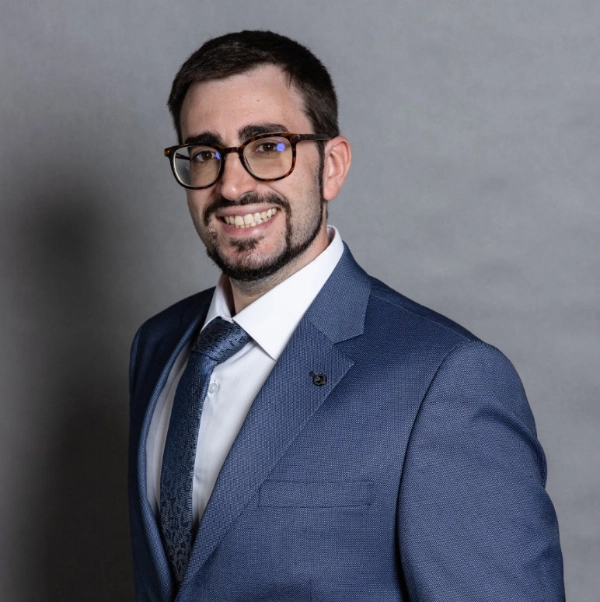
Mickael Romaniello
Mobile Engineer — Bordeaux
12+ yrs 15+ projects 4.8

In short: I build iOS and Android apps for clients in Los Angeles (3,979,576 residents) and across California. One single point of contact, 12 years of experience, delivery from concept to publication in 8 to 16 weeks.

Publishing an app is 30% of the work. Maintaining it is the remaining 70%.

Most businesses in Los Angeles celebrate their app launch on the stores.

And then? Nothing.

The code slowly rots. Nobody watches the crash reports. Nobody anticipates when a new version of iOS or Android changes the rules.

The app that was supposed to scale your business becomes a massive liability.

Let's look at reality.

You just bought a brand new car. If you never change the oil, the engine will seize in two years. For a mobile application, it is exactly the same concept.

The hidden cost of inaction is invisible at first, but it hits hard. Users hate broken software.

What is mobile app maintenance?

There is no single type of maintenance, but three distinct pillars. Each plays a crucial role in the survival of your project in Los Angeles.

  • Corrective maintenance. This is bug fixing. Your checkout button stopped working on Tuesday and 200 customers are blocked in California? This is calling the plumber for an emergency pipe burst.
  • Adaptive maintenance. This is technological survival. Apple releases iOS 18 or new iPhone screen sizes. Your app suddenly relies on a deprecated API and the screen goes completely white. This is like putting winter tires on when the snow hits. Without it, you slide off the road.
  • Evolutive maintenance. This is product growth. Your users demand a dark mode or biometric fingerprint login. This is like renovating your restaurant's dining room after five years. It was not broken, but it had become outdated compared to current expectations.

If you ignore these three pillars, the punishment from the market is immediate.

The key point: without corrective maintenance, you lose user trust (62% uninstall after a technical bug according to Statista, 2025). Without adaptive maintenance, your app eventually disappears from the stores. And without evolutive maintenance, your competitors in Los Angeles simply overtake you.

A mobile application is a living digital product. The moment you stop taking care of it, technical debt accumulates. It is like termites in a wooden house. At first, you see nothing. Eventually, everything collapses.

Mickael
Mickael Romaniello
Mobile Product Engineer — Bordeaux, France

Some of my clients have been working with me for years. Why? Because I don't vanish into thin air once the iOS or Android app is published.

Based in Bordeaux, I support my clients over the long haul. During my 12-year career, I've learned that launching an app is just the beginning of the story. You have to improve it, maintain it, and listen to the users.

The most important factor is this rigorous follow-up. I am here to stand by you for the long term, like a true partner. It's a matter of trust.

12+
years experience
15+
projects delivered
5
industries
4.8
rating

Why choose an expert in Los Angeles?

I have guided dozens of clients over the past 12 years. And I know exactly what the number one fear is when launching an app project.

It is the fear of losing control.

You hand over your baby, sign an estimate, and then hear absolutely nothing for three months. You become entirely dependent on a technical black box. 🕵️‍♂️

The key advantage of our collaboration is total transparency.

Even if I am not physically sitting in your office in Los Angeles, you see absolutely everything that is happening.

To achieve this, we set up simple and highly effective workflows.

Working with Los Angeles

Los Angeles brings a lot of media and entertainment work, where the app is one piece of something larger and the brand is already fixed. That is easier than it sounds: when the design language exists, the arguments about colour and type never happen, and the whole conversation stays on what the thing actually does.

It brings its own discipline, though. A brand built for print and film does not always survive contact with a phone. Type set at a weight that looks elegant on a poster can be unreadable at arm's length on a bright screen; a palette with beautiful low-contrast pairings can fail basic accessibility; a logo designed for a title card does not shrink to a tab bar icon. My job on those projects is often to protect the brand from a literal translation of itself, and to propose the smallest adjustments that keep the identity intact while making the screen usable.

Media projects also tend to be heavy with video and images, which is where mobile performance is actually won or lost. Full-resolution assets on a list view make an app that stutters and a data plan that evaporates. The work that matters here is invisible: resizing on the server, loading progressively, caching properly, and never blocking the interface while something downloads. It is unglamorous, and it is the difference between an app people keep and one they delete after a week.

The nine-hour gap means our working days do not really meet — your morning is my evening. That works well with a rhythm of weekly deliverables you review at your desk and I act on overnight, and it works badly with a project that needs live back-and-forth to move. If yours is the second kind, someone in your timezone will serve you better and I will say so rather than take the work.

Why Invent Better?

An app can be built fast and cheap. What costs money is what comes next: code written without structure becomes impossible to change, and the smallest new feature means starting over. Invent Better charges for the work that makes a second version possible — tests, a readable architecture, and code another developer can pick up.

It is entirely possible to build a mobile application extremely fast and for very little money.

All you have to do is ignore every best practice, copy and paste random blocks of code from the internet, and cross your fingers hoping it holds together. On the day of your big presentation in Los Angeles, the app will probably look fine.

But that thin layer of paint will crack almost immediately.

The second you get more than ten users trying to log in at the same time, the system will crawl to a halt. On mobile devices, user patience is brutally short. And slowness is always perceived as a broken product.

How does maintenance work?

The most common scenario in Los Angeles is code takeover. You had an application built by another developer or agency, and today, you are left alone with an unstable product.

I do not judge the past; I secure the future. Here is the takeover methodology:

The Audit: It is like a doctor examining a patient for the very first time. I comb through the code, verify the architecture, analyze the crash data, and read the store reviews.

The Triage: We do not rewrite everything immediately. We prioritize. Security flaws and major crashes come first. Then performance bottlenecks. Finally, the minor interface glitches.

The Stabilization Sprint (2 to 4 weeks): This is the emergency surgery room. I fix the top 10 most critical issues. I install monitoring probes. I add automated tests to the most fragile parts of your application for your customers in California.

Cruising Altitude: Once stabilized, the app enters a standard monthly rhythm. You finally stop stressing out every time your phone rings because of a complaining customer.

Case study

That morning, Apple pushed a major iOS system update. It is the exact event that unprepared developers fear the most.

For a highly active e-commerce client in Los Angeles, the punishment was immediate: the application's checkout flow broke completely. Not a single purchase could go through. Mobile revenue dropped to zero in a matter of minutes.

Fortunately, we had an active maintenance contract with real-time monitoring in place.

Just two hours after the issue began, Crashlytics sent me a red alert. I was able to identify the precise root cause within minutes: Apple had abruptly deprecated an older form validation API without providing full backward compatibility.

I built the fix, tested the solution thoroughly on the staging environment, and submitted the critical update to Apple, utilizing their expedited review channel for major bugs.

The maintenance investment

I do not quote maintenance without looking at the app first, because technical debt and traffic differ in every case. So I work in levels. The essential level covers monitoring, critical bug fixes, and keeping the app compatible with each new iOS and Android release. Higher levels add feature work on a predictable monthly basis.

I do not provide cookie-cutter quotes without seeing the patient first. Every app in Los Angeles is unique, has different technical debt, and handles different traffic volumes. But here is how I structure my service levels.

The Essential level: This is life support. I provide 24/7 monitoring, fix critical blocking bugs, and ensure ongoing compatibility with new iOS and Android versions. Your app stays alive, functional, and compliant with store rules. It is your basic insurance policy.

Industries we serve

Every industry has its own technical emergencies. Maintaining an e-commerce app requires completely different reflexes than maintaining a medical platform in Los Angeles.

Healthcare and Healthtech

There is absolutely no room for error. GDPR and HIPAA compliance audits must be constantly anticipated. Patient data security requires regular penetration testing to ensure the backend architecture remains bulletproof. I also actively maintain vital features like offline modes, which are essential for rural practitioners traveling across California.

Tourism and Hospitality

The rhythm is highly seasonal. The goal is to have a flawless, stress-tested application ready right before the summer or winter peaks in Los Angeles. Maintenance focuses heavily on offline mode reliability (for foreign tourists without cellular data) and the real-time synchronization of booking databases. A crashing app in the middle of August is disastrous.

E-commerce and Retail

Frequently asked questions about mobile app maintenance in Los Angeles

Why is maintenance absolutely essential for an app in Los Angeles?

Because software rots over time. Smartphones evolve and operating systems change. Without maintenance, your app accumulates invisible bugs. Eventually, users flee and your entire initial investment goes up in smoke.

What happens if I ignore regular store maintenance from Los Angeles?

Eviction. The App Store and Google Play regularly purge their catalogs. An application that has not been updated in over a year risks total deletion to protect end-users. It is that simple.

Does my app in Los Angeles truly need technical updates every year?

Yes. Apple and Android dictate new mandatory security rules and new screen aspect ratios very frequently. If you do not update the core codebase, blank white screens will plague users with new phones in California.

How does maintenance improve my store rating in Los Angeles?

The key point: 62% of people immediately uninstall after a technical bug (Statista, 2025). By killing bugs proactively, we prevent 1-star revenge reviews. We then integrate user suggestions to actively hunt for 5-star ratings.

What is the actual return on investment of maintenance in Los Angeles?

The ROI is the massive amount of money you do not lose. It is avoiding a GDPR data breach fine, protecting your initial build budget, and securing the sales generated by a flawless 24/7 digital storefront.

Can maintenance save an app that is currently declining in Los Angeles?

Yes, provided the technical foundations are not completely destroyed. A deep audit will give a clear answer. By fixing the 20% of bugs causing 80% of the uninstalls, we often resurrect projects presumed dead.

What professional tools do you use for app maintenance in Los Angeles?

No magic, just industry standards. Google Crashlytics for real-time crash alerts, Sentry to trace the exact error path, and Continuous Integration (CI/CD) pipelines to deploy code without human errors.

How do you handle security vulnerabilities for businesses in Los Angeles?

This is purely preventive maintenance. I monitor the open-source libraries your application relies on. The moment a vulnerability is publicly disclosed (CVE), I patch the code and push an emergency update.

Do you offer a free technical audit for apps in Los Angeles?

A deep codebase audit takes days of expert work and cannot be free. However, an initial 30-minute call to evaluate the surface-level problems visible on the public stores is completely free and highly educational.

What is the difference between maintenance and rebuilding an app in Los Angeles?

Maintenance heals and reinforces the existing structure. A rebuild is bulldozing the house to pour a new concrete foundation. We only recommend a rebuild when the technical debt makes maintenance more expensive than starting fresh.

Ready to launch your app in Los Angeles?

You have the idea. You know your market in California. Now, it is time to take action.

But not just in any random way. The key advantage of working together is absolute clarity. I will not sell you useless features. I will not make empty promises that I cannot keep.

Ready to launch your project?

In 30 minutes, you will know exactly where to start.

Book a free call →

30 minutes to start your project

Book a free call →

Working together remotely

Most of my projects run remotely, and in practice that changes very little. We talk over video whenever you need to, not only at major milestones, and you can reach me with questions at any point during the project — I always answer.

Once we are working together, travelling to meet you on site can absolutely be arranged if your project calls for it. Travel costs are quoted separately, upfront and with no surprises.

Message on WhatsApp

About the author

Mickael Romaniello — Mobile product engineer based in the South of France. 12 years building iOS, Android and desktop apps. 15+ projects delivered for startups, mid-market companies and enterprise clients. LinkedIn.

Last updated:

Standards & references

Apple Human Interface Guidelines · Google Material Design · web.dev (Google) · MDN Web Docs · OWASP Mobile Top 10