 Mickael Romaniello
30 minutes, no slides, nothing to prepare.
Mickael Romaniello
30 minutes, no slides, nothing to prepare.
Mickael Romaniello
30 minutes, no slides, nothing to prepare.
Mickael Romaniello
30 minutes, no slides, nothing to prepare.
One single point of contact, from concept to publication. 12 years of experience. 15+ apps delivered.
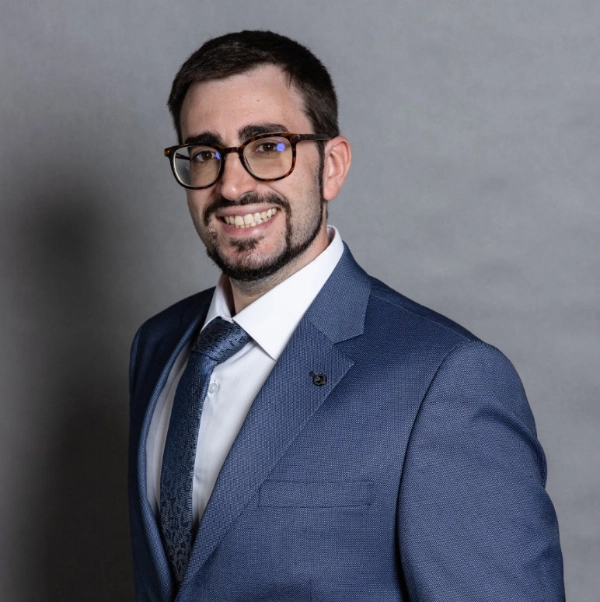
In short: I build iOS and Android apps for clients in Los Angeles (3,979,576 residents) and across California. One single point of contact, 12 years of experience, delivery from concept to publication in 8 to 16 weeks.
Look around a meeting room in Los Angeles.
What do people put on the table?
iPhones.
If you are targeting professionals, decision-makers, or executives, the Apple ecosystem is essential.
In short, the iPhone is often the default device in the corporate world.
The environment is secure, closed, and controlled.
Building a native iOS app means ensuring your product fits perfectly into the daily lives of these users.
It means using the visual cues they are used to.
If your interface is messy, they will not trust your service.
I help you design and develop an iOS app in Los Angeles that radiates professionalism.
An app that responds instantly, without friction, and enhances your brand image.
iOS development is not just coding for a different phone.
It is adopting an entire philosophy.
Apple's philosophy.
Apple controls everything. The hardware (iPhone, iPad) and the software (iOS).
The key point is that this strict control is a massive strength for us.
Unlike Android, where we have to test on thousands of different screens, the iOS universe is much more constrained.
This allows us to achieve an exceptional level of polish for every screen of your application in Los Angeles.
To code, we use the official languages: Swift and SwiftUI.
SwiftUI is Apple's modern standard. It is clean, fast, and built to create smooth interfaces.
But code is not everything.
A good iOS app must respect Apple's Human Interface Guidelines.
This is the design bible at Apple.
It dictates the size of buttons, how menus should open, and the margins to respect.
Why does this matter?
Because iOS users spend 2x more in-app than Android users.
They pay more, but they demand a perfect experience.
If your app does not look like an Apple app, the user will feel it immediately.
They will be confused. They click. They quit. They forget.
My job as an iOS developer is to melt your idea into this premium mold.
We create a product that feels native, natural, and reassuring for your target audience in Los Angeles.
Twelve years ago, I launched my very first mobile application. Phones have changed since then, but my job remains the same: turning ideas into concrete tools.
From my office in Cannes, I help entrepreneurs and SMBs design iOS and Android apps that make real sense. I don't just code for the sake of coding. I try to understand your business, your users, and your actual needs.
My goal is simple. Build an application that people will actually want to use every day. The key point: we build for them, not for us. Let's talk about yours.
The economy in Los Angeles is evolving fast. Very fast.
Local businesses can no longer settle for a basic, aging website. Digital transformation is happening everywhere across California. And mobile devices have become the absolute center of this shift. 🚀
In short: your clients live with their phones in their hands.
It is an unavoidable reality that most global web traffic comes from mobile devices. If your business in Los Angeles is not easily accessible on their home screen, it is practically invisible to a massive chunk of your audience.
I help companies build this vital digital presence. Governments across United States are pushing small and medium businesses to adapt to these new consumer habits, and funding digital growth.
The observation is the same everywhere. The residents of Los Angeles want to order, book, or find information with a single tap, whether they are on their couch or commuting.
Los Angeles brings a lot of media and entertainment work, where the app is one piece of something larger and the brand is already fixed. That is easier than it sounds: when the design language exists, the arguments about colour and type never happen, and the whole conversation stays on what the thing actually does.
It brings its own discipline, though. A brand built for print and film does not always survive contact with a phone. Type set at a weight that looks elegant on a poster can be unreadable at arm's length on a bright screen; a palette with beautiful low-contrast pairings can fail basic accessibility; a logo designed for a title card does not shrink to a tab bar icon. My job on those projects is often to protect the brand from a literal translation of itself, and to propose the smallest adjustments that keep the identity intact while making the screen usable.
Media projects also tend to be heavy with video and images, which is where mobile performance is actually won or lost. Full-resolution assets on a list view make an app that stutters and a data plan that evaporates. The work that matters here is invisible: resizing on the server, loading progressively, caching properly, and never blocking the interface while something downloads. It is unglamorous, and it is the difference between an app people keep and one they delete after a week.
The nine-hour gap means our working days do not really meet — your morning is my evening. That works well with a rhythm of weekly deliverables you review at your desk and I act on overnight, and it works badly with a project that needs live back-and-forth to move. If yours is the second kind, someone in your timezone will serve you better and I will say so rather than take the work.
An app can be built fast and cheap. What costs money is what comes next: code written without structure becomes impossible to change, and the smallest new feature means starting over. Invent Better charges for the work that makes a second version possible — tests, a readable architecture, and code another developer can pick up.
It is entirely possible to build a mobile application extremely fast and for very little money.
All you have to do is ignore every best practice, copy and paste random blocks of code from the internet, and cross your fingers hoping it holds together. On the day of your big presentation in Los Angeles, the app will probably look fine.
But that thin layer of paint will crack almost immediately.
The second you get more than ten users trying to log in at the same time, the system will crawl to a halt. On mobile devices, user patience is brutally short. And slowness is always perceived as a broken product.
Many app projects fail at the App Store door.
Apple is strict.
The most important factor for success is understanding their expectations.
From the very beginning of our collaboration in Los Angeles, we integrate Apple's rules into your specifications.
No hidden external purchases. No notification spam. No tracking without consent.
Once the foundation is sound, development begins.
I code in iterations. This means that every two weeks, you see the project progress.
How? Via TestFlight.
You open TestFlight on your iPhone, download the update, and test it at home in Los Angeles.
You see exactly what you are paying for.
When the application is ready, we prepare for the big leap.
App Store Connect requires special attention.
You need the right screenshot sizes, precise text, and above all, you must complete all legal privacy requirements.
The review process by Apple takes a few days.
They test on real devices.
Apple processes 100,000+ app submissions per week, so we must be flawless to avoid wasting time.
As soon as the green light is given, your app becomes available to the whole world.
The healthcare sector demands absolute rigor.
A client contacted me to create a connected medical tracking app.
On iOS, health has its own ecosystem: HealthKit.
The goal was to synchronize Apple Watch data (heart rate, sleep) with a simple and secure patient interface.
The key advantage here is the data protection offered by Apple.
We built a completely native architecture in Swift.
Security and privacy had to be flawless to pass the App Store review.
Apple is extremely strict about medical apps. nearly one submission in four is rejected, and this number is even higher for healthcare.
So we bulletproofed the permissions and the privacy questionnaire on App Store Connect.
The application was tested intensively via TestFlight by a small panel of patients.
The result?
Apple approval secured on the first try.
Today, the app holds a 4.8/5 rating on the App Store, driven by the ultra-smooth experience typical of iOS.
This is the level of excellence I apply for my clients in Los Angeles.
A native iOS app generally costs noticeably more than a web or hybrid equivalent. The reason is Apple's standards: its design rules demand care on every screen, button and animation, and App Store review rejects what does not meet them. That extra cost mostly buys a smaller chance of being rejected.
This is the question everyone in Los Angeles asks.
Let's be clear: a native iOS application generally costs noticeably more than a web or hybrid app.
Why?
The most important factor is Apple's high standards.
Apple's design rules require special care for every screen, every button, every animation.
We cannot cut corners.
Then, there is the preparation for the Store.
nearly one submission in four is rejected.
To avoid this, I spend time ensuring the code is perfect, privacy policies are clear, and all crashes are resolved on TestFlight before publishing.
This preparation and quality time comes at a cost.
Excellence requires work.
There are also Apple's fixed fees.
It is not just about coding an app.
The most important factor is using the phone's strengths for your business.
The iPad and iPhone are the ultimate reading screens.
If you offer exclusive content, iOS users spend 2x more in-app than Android users.
Selling subscriptions through Apple's native system is the best way to retain readers in Los Angeles.
The iPhone has the best augmented reality sensors on the market (ARKit).
Placing virtual furniture in a living room, or taking a 3D apartment tour becomes incredibly smooth.
It is a guaranteed wow effect for your clients.
Apple Wallet passes are magical.
The client buys their ticket, and it goes straight into their Wallet app, with a QR code ready to be scanned at the entrance of your event in Los Angeles.
No more digging through emails.
We simplify the user's life as much as possible.
Because iPhone users are used to excellence. If the app does not respect Apple's rules, they click. They quit. They forget.
Yes. Apple processes 100,000+ app submissions per week with human reviewers hunting down bugs and confusing interfaces.
You can invite up to 10,000 external testers via TestFlight before the app is even public on the Store.
The key point is performance. Native guarantees the best fluidity and access to most the iPhone's components (camera, Face ID, etc.).
I can audit the old code, but for the future of your company in Los Angeles, the standard is now to migrate everything to Swift.
You have to request it online. It is free, but delays vary from a few days to a month. We will do it on day one of the project.
The Apple ecosystem is recognized as one of the safest. Native Swift code inherently eliminates many common security flaws.
Yes. The statistics are clear: iOS users spend 2x more in-app than Android users.
Do not panic. We read the reviewer's report, fix the problem (often a simple line in the description), and resubmit.
Yes. You own the application. It will be published on your own Apple Developer account, not mine.
Ready to launch your app in Los Angeles?
You have the idea. You know your market in California. Now, it is time to take action.
But not just in any random way. The key advantage of working together is absolute clarity. I will not sell you useless features. I will not make empty promises that I cannot keep.
In 30 minutes, you will know exactly where to start.
Book a free call →30 minutes to start your project
Book a free call →Most of my projects run remotely, and in practice that changes very little. We talk over video whenever you need to, not only at major milestones, and you can reach me with questions at any point during the project — I always answer.
Once we are working together, travelling to meet you on site can absolutely be arranged if your project calls for it. Travel costs are quoted separately, upfront and with no surprises.