 Mickael Romaniello
30 minutes, no slides, nothing to prepare.
Mickael Romaniello
30 minutes, no slides, nothing to prepare.
Mickael Romaniello
30 minutes, no slides, nothing to prepare.
Mickael Romaniello
30 minutes, no slides, nothing to prepare.

One single point of contact, from concept to publication. 12 years of experience. 15+ apps delivered.
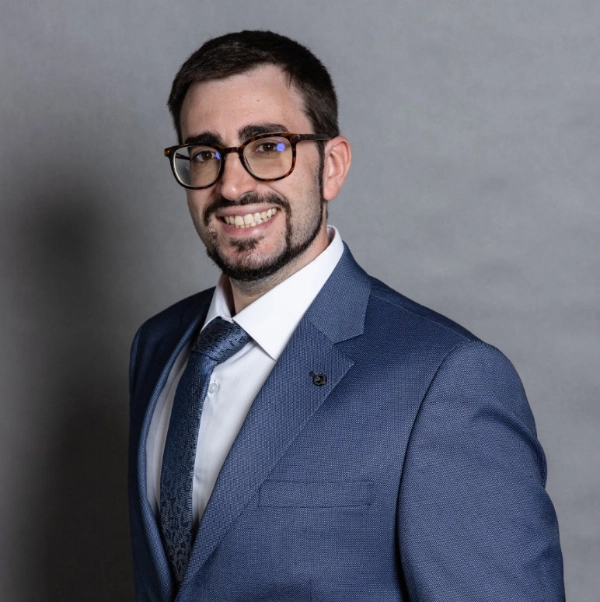
In short: I build iOS and Android apps for clients in Toronto (2,794,356 residents) and across Ontario. One single point of contact, 12 years of experience, delivery from concept to publication in 8 to 16 weeks.
Google Play hosts over 2 million apps.
How is yours going to stand out in Toronto?
It will not be with average design or constant bugs.
Users are ruthless.
A slow app means an immediate uninstall.
The key advantage of an expert developer is complete mastery of this chaotic environment.
Android means thousands of different screen sizes. Processors that vary wildly.
Building an Android app development project in Toronto requires extreme rigor.
You have to know Google's rules. Battery constraints. Ever-stricter permissions.
I handle all of that for you.
My goal is for your app to become obvious and essential for your customers in the Ontario area.
Not just another digital paperweight.
We set a real strategy. We build it cleanly. We launch it successfully.
People often ask me whether to start with iOS or Android for a project in Toronto.
The answer depends on your target audience and your budget.
The key advantage of Android is its massive reach.
Especially in emerging markets or for the general public.
But there is a fundamental difference with Apple.
Apple controls everything. They have about twenty iPhone models in circulation. It is easy to test.
Android is the wild west.
Google reports there are more than 24,000 active Android device models.
Some have tiny screens. Others run on Android versions that are five years old.
This fragmentation makes testing much more complex and expensive.
You have to ensure the app does not crash on a cheap four-year-old phone, while still leveraging the power of the latest Samsung Galaxy.
However, Android is often the best choice to start if you are doing B2B in the Ontario area.
For example, equipping your delivery drivers or field technicians with inexpensive rugged tablets.
In that scenario, Android's open ecosystem is unbeatable.
Twelve years ago, I launched my very first mobile application. Phones have changed since then, but my job remains the same: turning ideas into concrete tools.
From my office in Cannes, I help entrepreneurs and SMBs design iOS and Android apps that make real sense. I don't just code for the sake of coding. I try to understand your business, your users, and your actual needs.
My goal is simple. Build an application that people will actually want to use every day. The key point: we build for them, not for us. Let's talk about yours.
The economy in Toronto is evolving fast. Very fast.
Local businesses can no longer settle for a basic, aging website. Digital transformation is happening everywhere across Ontario. And mobile devices have become the absolute center of this shift. 🚀
In short: your clients live with their phones in their hands.
It is an unavoidable reality that most global web traffic comes from mobile devices. If your business in Toronto is not easily accessible on their home screen, it is practically invisible to a massive chunk of your audience.
I help companies build this vital digital presence. Governments across Canada are pushing small and medium businesses to adapt to these new consumer habits, and funding digital growth.
The observation is the same everywhere. The residents of Toronto want to order, book, or find information with a single tap, whether they are on their couch or commuting.
Toronto is the one Canadian market where you will be compared against agencies with account managers before anyone looks at the work. That changes the conversation: the question stops being whether it can be built and becomes who you will actually be talking to. With me it is the person writing the code, which on a first product is worth several weeks.
The reason it is worth weeks is loss of signal. In an agency, what you say in a meeting is restated by an account manager, passed to a technical lead, and cut into tickets for developers who have never heard you speak. Each step loses a little intent. When you explain why a screen has to behave a certain way, the person who will write it is listening, and can tell you in the same breath that it will cost three extra days or that it will fight the platform.
The honest limit is the other side of that. One person is not a team of thirty. I will not take a project that needs four developers in parallel to hit a fixed date, I do not do interface design at the level of a specialist studio, and if the product has to launch on iOS, Android, web and a connected TV at once, you need something other than me. I say that in the first conversation rather than the third month.
Practically, Toronto is six hours behind me, so your morning is my afternoon and we get about three hours of real overlap a day. That is enough to answer a blocking question the same day and to hold a weekly call, and it is not enough for a project that needs continuous discussion. Ontario also has its own privacy rules, and if your users include health information the requirements tighten considerably — worth settling at the start, because it determines where the data is allowed to live.
With Invent Better you get an installable build every two weeks, even when it is incomplete. That is the difference between following a project and waiting for one. You have access to the code repository from day one, and every decision is written down rather than remembered. A disagreement surfaces after two weeks, not at final delivery.
Software development is far too often treated as a terrifying black box.
In many traditional projects, you sign a massive specification document, you pay a hefty deposit, and then you just wait. For months, you receive nothing but vague updates. A few reassuring emails. A lot of "trust us, it is coming along great."
And then the day of the final big reveal in Toronto arrives... and your heart sinks. The product looks and feels nothing like what you envisioned. But it is entirely too late, and your budget is completely gone.
The most important factor: when you work with me, that black box simply does not exist. Everything is entirely transparent.

Let's take a concrete example.
A client contacted me to build a home services booking app, specifically targeting the Ontario area.
The initial problem? The app had to target the general public.
And the general public uses Android. From all brands. At all price points.
The most important factor was managing Android's terrible fragmentation.
The app had to be as smooth on a five-year-old cheap Xiaomi as on the latest Samsung Galaxy S.
I rebuilt the interface using Jetpack Compose, Google's new design tool.
The result? Much lighter and more robust code.
We launched the app in Toronto via a Staged Rollout on the Google Play Console.
A large first. We detected a strange crash that only happened on old Oppo phones using Crashlytics.
We fixed it the exact same day. Without the majority of users ever noticing.
Then we opened it to everyone.
The app maintained a 4.8-star rating on the Play Store. And the client was able to expand their service without fearing their servers would melt.
Treat an Android budget as a growth line rather than an expense, because that is how it behaves. Someone online will code something for almost nothing, and it will be slow, insecure and impossible to extend. The useful comparison is not one quote against another, but the cost of building it twice against building it once.
When talking budget for an Android app in Toronto, you have to change your perspective.
It is not an expense. It is a growth tool.
You can find someone on the internet who will code you something for almost nothing.
Spoiler: it will be a technical disaster. Termites in a house.
The app will be slow on half of your Canada customers' phones. Bugs will pile up. You will lose credibility.
In short, redoing a poorly coded app always costs more than doing it right the first time.
With me, you are not buying lines of code. You are buying a solution.
I do not have a reserved domain. I adapt to your market in Toronto.
The key advantage of Android is its technical flexibility.
It is the question nobody asks a freelancer and the one worth asking first. My answer is three concrete things: the code sits in a repository in your name from day one, decisions are written down rather than kept in my head, and the store accounts are yours. Another developer can pick it up without me. That is not a promise, it is an arrangement — and you can check it in the first week.
You do, entirely, and from the start rather than at the end. The repository is opened in your name, you have access during development, and there is nothing to claim at delivery. The same goes for the designs and the store accounts. The only thing worth discussing is if you want to reuse a component I wrote elsewhere — I say so before using it, not after.
We fix it and resubmit, and that is part of the project. A rejection is not a rare accident: Apple checks dozens of points, and the common reasons are predictable — a test account that does not work, a permission requested with no explanation, an advertised feature that is not there yet. I deal with those before submitting, which guarantees nothing but avoids most of it. You never have to handle the exchange with the reviewer.
Yes, and you should know that before building on one. Apple and Google can remove an app that breaks their rules, and they change those rules regularly. Abrupt removals mostly hit apps that collect data without saying so, copy a brand, or have not been updated in a long time. It is also why a web presence stays useful alongside: nobody can take that one away from you.
It keeps running, and you keep everything needed to keep it alive: the code, the accesses, the signing keys, the documentation. I do a written handover rather than a file transfer — what was built, why, and where the traps are. It is half a day of work that saves whoever comes next several weeks of reverse engineering, and I would rather we parted that way.
Before any quote, there is a list to gather: the code repository, the App Store Connect and Google Play accounts — in your name, not the provider's — the Android signing key, and access to the hosting and database. The signing key is the critical piece: without it, the app can no longer be updated, it has to be republished under a new identifier, and you start again from zero installs.
Wherever you decide, and it is a decision to take early because it is expensive to undo. For most projects a European host is enough and keeps GDPR simple. For health data the hosting has to be certified, which narrows the choice and weighs on the budget — better learned on the first call than on launch day. In every case, the accounts are in your name.
I know before you see the review. A crash reporting tool sends the error with the device, the OS version and the exact place in the code — with no personal data. Without it, you discover bugs through store reviews, which is to say too late and in public. It is one of the few things I set up on every project, however small, because it costs almost nothing and changes everything.
On the code side, yes: every released version is tagged and we can return to the exact state of a delivery. On the store side it is more nuanced — Google lets you halt a rollout, Apple expects a fix to be published. The real protection is upstream: a staged rollout on Android, a real testing phase, and updates small enough that you know what broke.
It works, then it degrades slowly, and one day it stops launching. iOS ships a major version every September, Android every year, and each one breaks something. An app left alone for eighteen months usually costs more to bring back than the maintenance would have. You can stop — it is your call and I will not bill you a subscription for nothing — but decide it knowingly.
Ready to launch your app in Toronto?
You have the idea. You know your market in Ontario. Now, it is time to take action.
But not just in any random way. The key advantage of working together is absolute clarity. I will not sell you useless features. I will not make empty promises that I cannot keep.

In 30 minutes, you will know exactly where to start.
Book a free call →30 minutes to start your project
Book a free call →Most of my projects run remotely, and in practice that changes very little. We talk over video whenever you need to, not only at major milestones, and you can reach me with questions at any point during the project — I always answer.
Once we are working together, travelling to meet you on site can absolutely be arranged if your project calls for it. Travel costs are quoted separately, upfront and with no surprises.