iOS and Android: do you really need both at launch?
In France, Android accounts for 63.26% of mobile traffic and iOS for 36.72% (StatCounter, July 2026). Those numbers do …
 Mickael Romaniello
30 minutes, no slides, nothing to prepare.
Mickael Romaniello
30 minutes, no slides, nothing to prepare.
Discover why including everything in your first app version is a strategic mistake and how to protect your budget.
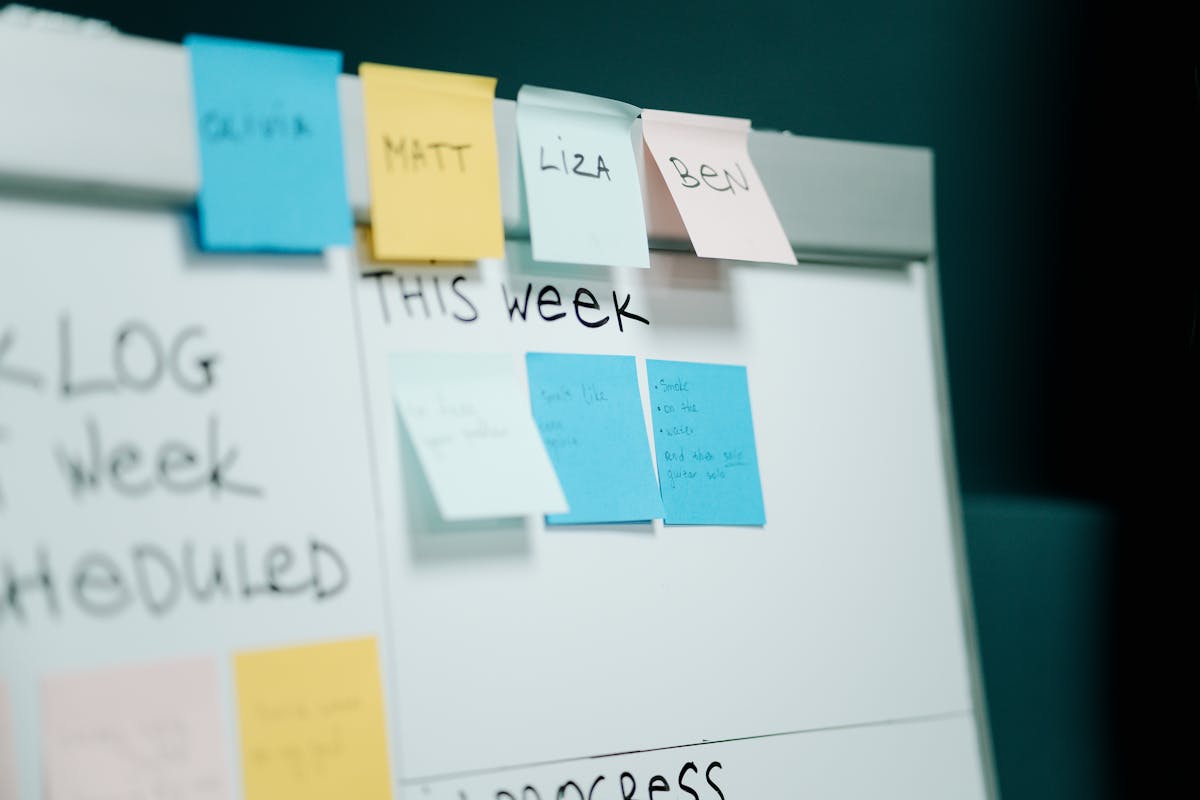
Most business owners approach app creation with immense ambition. They accumulate ideas for months. Their goal is to offer the most complete tool on the market. Yet according to a Pendo study (2024), 80% of app features are never or rarely used. The most important factor is resisting this temptation. According to Statista (2024), the vast majority of features built into apps are never used.
Wanting to launch a perfect, overloaded first version is a dangerous illusion. The biggest global successes all started with a basic proposition. They succeeded because they solved a single problem with absolute fluidity. As a Product Engineer, my first role is often to slow down this creative frenzy.
The first danger of an overloaded app is the impact on your cash flow. Every new idea extends development time. Every extra screen multiplies the risk of bugs and delays. A project with 20 screens costs on average 3 times more than one with 5 well-designed screens. You invest large sums before even confronting your product with reality.
In short: your business instincts, however brilliant, are still hypotheses. You think customers will love that internal messaging feature. You're certain they'll use that complex profile customization. But statistics tell a different story. This is the classic trap of traditional specifications. These documents freeze your ideas for months. The market evolves, but your project stays locked in a lab. When it finally ships, it often solves a problem that no longer exists.
The key advantage of a simple interface is capturing attention instantly. When a user opens your product for the first time, their attention is fragile. They need to understand in seconds whether your solution will make their life easier. If you present a menu with 15 different options, you lose them. UX research shows users decide in under 7 seconds whether to keep or delete an app.
This is cognitive overload. Faced with too many choices, the human brain freezes and gives up. According to Apple's Human Interface Guidelines, clarity is the first design principle. Your customers don't want a digital Swiss army knife. They want a precise tool that solves their problem surgically.
The only profitable method is to reverse the process entirely. Instead of doing everything, we do one thing perfectly. We analyze your idea list together to identify the true value of your business. We look for the precise action that makes your customer pull out their phone.
The key point: isolate that core feature and eliminate everything else. If your app simplifies booking appointments, everything must converge toward that action. No forum, no news feed. The flow must be so obvious a child could complete it. This approach guarantees a devastatingly effective first impression.
Launching a focused product has a decisive advantage. It lets you publish much faster on the App Store and Google Play. Instead of waiting 12 months, your product is in customers' hands within 8 to 16 weeks.
Real usage data is infinitely more valuable than all your initial assumptions. You observe how customers actually use the interface. You receive suggestions directly from the field. Every euro spent addresses a real demand. This progressive strategy protects your initial investment.
Starting small doesn't mean building a throwaway product. In short: an app that does few things must be technically flawless. The internal foundations must be built with absolute quality standards, following Google's Material Design guidelines.
I design a lightweight architecture that is perfectly structured for the future. The foundation is ready to welcome new features without rebuilding. If your customers request a new option in 6 months, we can integrate it in 2 to 4 weeks. The system stays stable and responsive. This flexibility is impossible with a rushed, overengineered product.
Reducing the size of your first version takes real entrepreneurial courage. It means setting your ego aside. It means refusing to reassure investors with flashy but useless feature lists. It means choosing financial prudence and respect for the end user.
My role is to guide you through these difficult choices. We transform your ambitious vision into logical, measurable, profitable steps. That's the difference between spending money on a showcase and investing in a real asset.
Don't let poorly channeled ambition ruin your chances of success. Book a 30-minute call to trim your ideas and find your unique value.
12 years of experience, iOS + Android, one dedicated contact. Free 30-minute call to scope your need — no commitment, no jargon.
Book a call →
Most business owners approach app creation with immense ambition. They accumulate ideas for months. Their goal is to offer the most complete tool on the market. Yet according to a Pendo study (2024), 80% of app features are never or rarely used. The most important factor is resisting this temptation. According to Statista (2024), the vast majority of features built into apps are never used.
Wanting to launch a perfect, overloaded first version is a dangerous illusion. The biggest global successes all started with a basic proposition. They succeeded because they solved a single problem with absolute fluidity. As a Product Engineer, my first role is often to slow down this creative frenzy.
The first danger of an overloaded app is the impact on your cash flow. Every new idea extends development time. Every extra screen multiplies the risk of bugs and delays. A project with 20 screens costs on average 3 times more than one with 5 well-designed screens. You invest large sums before even confronting your product with reality.
In short: your business instincts, however brilliant, are still hypotheses. You think customers will love that internal messaging feature. You're certain they'll use that complex profile customization. But statistics tell a different story. This is the classic trap of traditional specifications. These documents freeze your ideas for months. The market evolves, but your project stays locked in a lab. When it finally ships, it often solves a problem that no longer exists.
The key advantage of a simple interface is capturing attention instantly. When a user opens your product for the first time, their attention is fragile. They need to understand in seconds whether your solution will make their life easier. If you present a menu with 15 different options, you lose them. UX research shows users decide in under 7 seconds whether to keep or delete an app.
This is cognitive overload. Faced with too many choices, the human brain freezes and gives up. According to Apple's Human Interface Guidelines, clarity is the first design principle. Your customers don't want a digital Swiss army knife. They want a precise tool that solves their problem surgically.
The only profitable method is to reverse the process entirely. Instead of doing everything, we do one thing perfectly. We analyze your idea list together to identify the true value of your business. We look for the precise action that makes your customer pull out their phone.
The key point: isolate that core feature and eliminate everything else. If your app simplifies booking appointments, everything must converge toward that action. No forum, no news feed. The flow must be so obvious a child could complete it. This approach guarantees a devastatingly effective first impression.
Launching a focused product has a decisive advantage. It lets you publish much faster on the App Store and Google Play. Instead of waiting 12 months, your product is in customers' hands within 8 to 16 weeks.
Real usage data is infinitely more valuable than all your initial assumptions. You observe how customers actually use the interface. You receive suggestions directly from the field. Every euro spent addresses a real demand. This progressive strategy protects your initial investment.
Starting small doesn't mean building a throwaway product. In short: an app that does few things must be technically flawless. The internal foundations must be built with absolute quality standards, following Google's Material Design guidelines.
I design a lightweight architecture that is perfectly structured for the future. The foundation is ready to welcome new features without rebuilding. If your customers request a new option in 6 months, we can integrate it in 2 to 4 weeks. The system stays stable and responsive. This flexibility is impossible with a rushed, overengineered product.
Reducing the size of your first version takes real entrepreneurial courage. It means setting your ego aside. It means refusing to reassure investors with flashy but useless feature lists. It means choosing financial prudence and respect for the end user.
My role is to guide you through these difficult choices. We transform your ambitious vision into logical, measurable, profitable steps. That's the difference between spending money on a showcase and investing in a real asset.
Don't let poorly channeled ambition ruin your chances of success. Book a 30-minute call to trim your ideas and find your unique value.
12 years of experience, iOS + Android, one dedicated contact. Free 30-minute call to scope your need — no commitment, no jargon.
Book a call →We write about mobile app development, user experience design, App Store optimization, project management, and industry trends. Our articles are based on real experience from client projects.
We aim to publish regularly with a focus on quality over quantity. Each article is written from hands-on experience, not generic advice.
Absolutely! Feel free to reach out via our contact page or book a consultation. We love hearing what questions our readers and clients have.
Most of my projects run remotely, and in practice that changes very little. We talk over video whenever you need to, not only at major milestones, and you can reach me with questions at any point during the project — I always answer.
You can also write to me directly on WhatsApp: same number I use every day, a French professional line that works internationally.